
The Billion-Dollar Sleep Ring: Can You Trust Oura’s Sleep Score?
Oura Ring, one of the most trending smart health devices currently, is facing criticism about its effectiveness.
Reading Time: 4 minutes
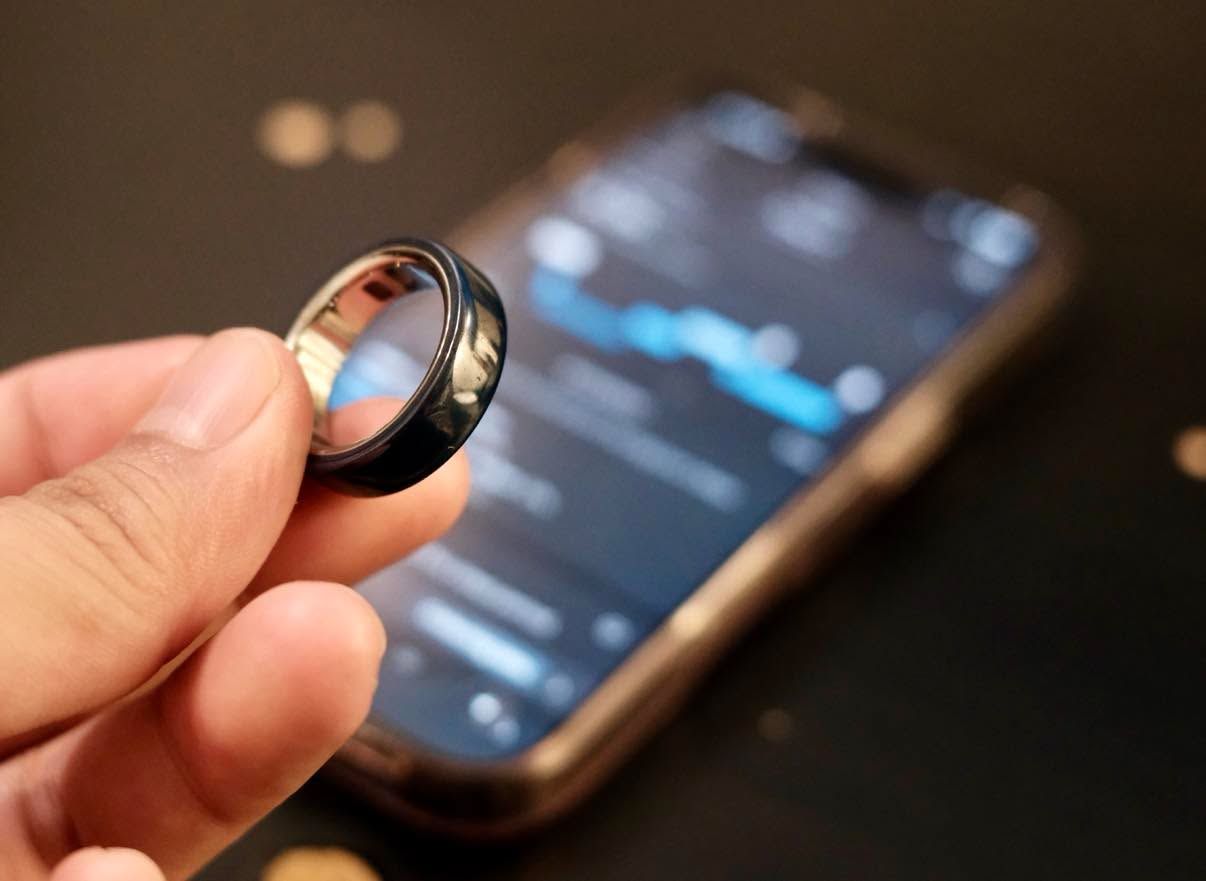
Every morning, before my father pours his morning coffee, he checks his “Sleep Score.” His Oura Ring measures how he sleeps overnight and sends him a sleep score from 0 to 100. His mood changes based on his score. When the score is above 90, he seems enthusiastic. When the score is in the 80s, he shrugs. And when it’s below 80, he seems to be concerned. He is not the only one who feels this way.
Oura, the company behind the Oura Ring, has grown into a major health tech company, gaining over five million subscribers in June 2026. Valued at approximately $11 billion, it filed for an Initial Public Offering to sell a share of the company to the public for the first time in September, despite the public listing being postponed. Oura uses its rings to track and estimate sleep duration, Rapid Eye Movement (REM) sleep, deep sleep, and other physiological indicators of sleep quality, combining them into a nightly Sleep Score. However, this method of measuring sleep is drawing attention to how much one can trust it.
Oura faced a proposed class-action lawsuit in August of this year alleging that the company misled consumers by exaggerating the accuracy of its sleep-tracking technology, by advertising that the Oura Ring has “95 percent sleep-staging accuracy.” The lawsuit claims that sleep happens in the brain, not the fingers. This lawsuit revolves around three key claims.
The first claim is that the method Oura Ring uses is scientifically inaccurate. According to one study, sleep is divided into three stages: light, deep, and REM sleep, which the body cycles through every night. When physicians try to identify these stages, they look at the brain. They attach electrodes to the scalp of the patient to record brain waves, track eye movements, and measure muscle tension. This procedure is called polysomnography (PSG), and it is the accepted standard in the medical field.
Oura, however, does not look at the brain; instead, it uses three sensors: an optical sensor that reads blood flow, a temperature sensor, and an accelerometer, a sensor that detects movement. From heart rate, heart-rate variability, temperature, and movement, the algorithm infers, based on the pattern, what phase of sleep it is observing. The problem with this measurement is the fact that these measurements are indirect. For example, heart rate can jump depending on the noise surrounding the person, and temperature can change from various things like higher room temperature and alcohol, meaning that it doesn't just measure sleep.
The second claim follows that the accuracy Oura advertises cannot be achieved with the method they use. Oura’s validation studies were conducted mostly on healthy adults. However, anyone with a sleep disorder or an irregular sleep schedule falls outside of that evidence. The third claim directly supports the second, as it cites a 2025 study by Scientific Reports, which showed that in terms of the core question of light, deep, REM, or awake, the Oura Ring was only accurate roughly 53.18 percent of the time. The complaint calls this a “coin flip’s chance,” criticizing Oura for misleading consumers.
However, Oura disputes this claim on three grounds, the first being arithmetic. With four possible stages (light, deep, REM, and awake), a random guess is right about 25 percent of the time, not 50. The second claim they make is that their study was conducted on an outdated product under poor collection because its data was collected in 2022, months before Oura made major updates that improved the sleep-staging algorithm. The researcher also used only two ring sizes, so almost a third of participants had no usable data. Third is that the brain can be understood without being observed using their method. In a 2021 paper by Oura’s own researcher drawing from PSG recordings from 106 people over 440 nights, it found that movement by itself allowed for the identification of four stages 57 percent of the time, and adding other factors like heart-rate variability raised it to 79 percent, and to 96 percent for the simpler question of whether a person was asleep or awake. Newer research also backs its claims, as a 2024 Brigham and Women’s Hospital study of 35 healthy adults found Oura to be the most accurate of three wearables tested, detecting 79.5 percent sensitivity compared to the 50.5 percent sensitivity of the Apple Watch. In the same year, University of Tokyo researchers compared the ring with at-home PSG in 96 adults over multiple days, and it found no big difference in measuring both total sleep time and deep sleep. However, both studies need qualifications. The Brigham study was funded by Oura, and its lead author was a medical advisor to Oura, and the Tokyo study’s list omits REM sleep, which the ring is said to underestimate.
Both sides in the end cite correct numbers; the dispute is simply over the gap regarding REM sleep. Oura says its 95 percent figure refers to telling sleep from wakefulness, where every study agrees at 85 to 96 percent. The answer for which stage a person is in runs from 79 percent under conditions considered most favorable by Oura to 53 percent under the least favorable: the ring is wrong somewhere between one in four and one in two times. What students need is a correction in perspective. The ring reliably measures how long a person slept, but what kind of sleep they got is an estimate, just like a weather forecast. Many people fall into a trap of orthosomnia, or being unhealthily obsessed with the data these rings provide.
So how should students use the Oura Ring? While the Oura Ring might be somewhat helpful in looking at the overview of your sleep, the best sleep habit is to always have eight to ten hours of sleep consistently. Sleep Score is worth checking, but it is also not worth worrying about.