
SophFrosh SING!: Boy Bands, Breakups, and Plenty of Drama
Diving deep into SophFrosh SING! 2026.
Reading Time: 5 minutes
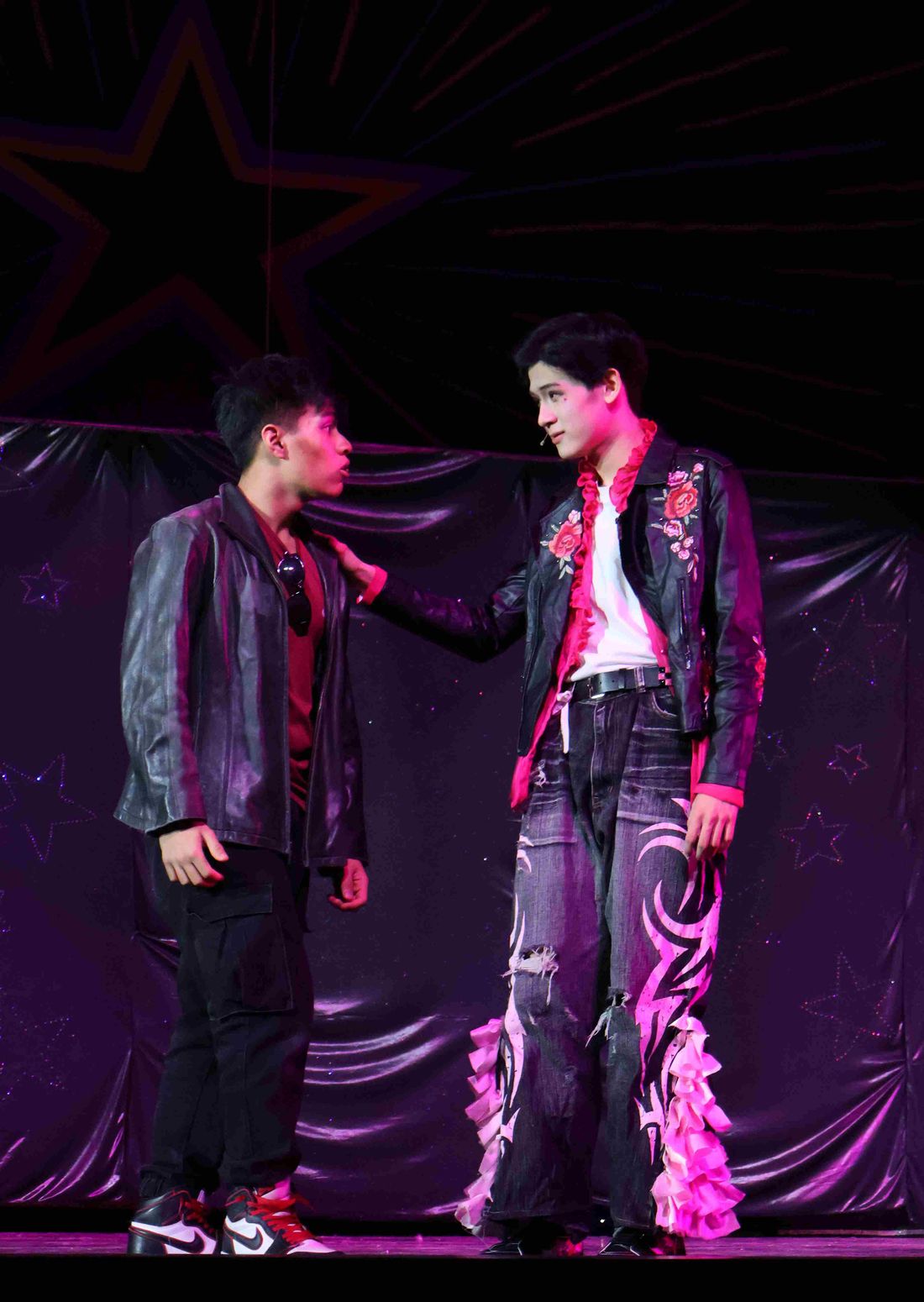
Coordinated by sophomore Claire Stansberry and produced by Budget Producer Calista Harrington, Creative Producer Angelina Lee, Technical Producer Alma Dream Esguerra, Administrative Producer Devi Ahuja, and Assistant Producer Arusha Miah, this year’s SophFrosh SING! followed a rising pop group that ran into trouble before a competition that could end their career. The show centered on the trio Ad Astra: the perfectionist Bethany Sinclair (Indira Pollak), the anxious Maya (Isabella Glassberg), the steadfast Sam (Wenzel Hu), and, later, a new member, Luca (Siddha Bajracharya). As trouble began to brew, the group was forced to pull itself together to win the competition.
SophFrosh SING! was able to effectively engage the audience with its performance, immersing them in the atmosphere of a singing competition. Directors of SophFrosh SING! gave out flags that audience members could wave when their favorite group in the competition was performing. Not only were these memorable souvenirs from the show, with audience members trying to collect all four flags, but they also encouraged active participation and made people feel like they were part of the performance. During Luca’s solo of “Somewhere Only We Know,” the SophFrosh directors led audience members to turn on their flashlights and wave their phones, giving a concert-like feel to the song.
The opening hip-hop sequence and the song “Are You Ready” were a terrific way to introduce the show, delivering energy and excitement that hyped up the audience for the rest of the performance. Overall, SophFrosh Hip-Hop was executed with plenty of spirit and synchronization, particularly on Thursday and Saturday, despite lacking the same energy on Friday.
SophFrosh Modern was also nicely integrated into the narrative, with their choreography complementing the song “Somewhere Only We Know,” performed by Luca and Two Direction. The song’s bittersweet, nostalgic tone matched Modern’s dance style, and Modern’s successful integration into the story strengthened their rendition.
Bolly made an abrupt appearance, and where they belonged in the entirety of the show was unclear. It seemed like a filler forced into the plot and clearly tacked on, pulling the audience away from the flow of the narrative. Bolly typically stands out because of the vibrant and dynamic choreography it presents; however, SophFrosh’s Bolly lacked that depth and energy.
In comparison to Bolly’s integration, SophFrosh Latin’s feature in Sam’s solo made it more engaging. Their choreography, including the ripple effect of the dancers’ hands extending out to correspond to the climax of Sam’s solo when he sings, “It’s gonna gonna gonna gonna it’s gonna be us!” made the performance entertaining. However, Latin occasionally felt out of place with the pop song being played; Sam’s energetic dance moves and the song’s pop momentum produced a disconnected performance, with dance styles and music genres clashing on stage.
SophFrosh’s main ensemble was cast perfectly: from the main three to supporting, each member embodied the role of their character. The little body language details, such as Bethany’s hair flips, Sam’s facial expressions during Luca’s audition, and Two Direction’s hair flips, really distinguished each character and brought them to life.
Additionally, songs and lyrics felt very fitting for each character, with lyric changes such as “My awesomeness is killing me” for Bethany, which is just so Bethany, and “Will you date me? Yes or no” for Two Direction. It was also great to see the chorus incorporated in “traitor” to add support to Maya’s solo, but also how they were the diehard fangirls of Two Direction who screamed every time they came on stage.
Maya’s “traitor” number was a highlight that truly showcased her vocal ability and gave chills to those throughout the theatre, showcasing a pivotal moment of vulnerability in the face of Bethany’s betrayal, and how much Maya cherished their friendship and memories. Bethany’s solos were also amazing, with her consistently strong belts throughout the song.
SophFrosh Band put on a solid performance, but during the early shows, they were delayed and missed some cues. The piano tended to rush during some of the slower songs, such as Bethany’s solo. While they tried to control the tempo, the lack of synchronization took away from the performer on stage. At times, they also had intonation issues and were just a bit flat, but overall, they brought the energy needed to match the pop stars on stage.
While the performances and choreography drove much of the show’s energy, the script itself laid the foundation for the production. SophFrosh SING! kicked off with a fantastic prologue. Ad Astra imploded when the chicly arrogant Bethany betrayed her childhood friends before the “Summer Sing Off.” It had strong Disney Channel vibes, with the powerful personalities on stage feeling like a playful parody of pop group culture.
Ad Astra recruited an outsider, Luca. With clear talent and songwriting ambitions, the spotlight was placed upon him. The group struggled to integrate him, and Maya lacked faith in his ability. The show strung together a chain of conflicts that built toward a climactic showdown with Bethany.
The story began to stall as the competition arrived. The initial sing-off was excellent, but each round followed the same tepid recipe: someone performs, scores are read, Bethany is upset. The eventual climax fitted into this pattern, and it tasted like your third instant ramen of the day: bloated, salty, and a little bland.
The sabotage subplot restored some of the lost momentum. It raised the stakes again, and produced some of the show’s funniest material—particularly, when members of Two Direction crumbled under the pressure of a mic “malfunction.” It served as a wonderful satirization of 2010s boy band culture, and the production was acutely aware of the pop-driven energy that resonates with high school audiences.
The show’s static characters were a pyrrhic strength. By sidelining character arcs, the script created memorable personas. It gave actors room to settle into familiar, exaggerated roles. The clear-cut villainy of Bethany made her easy to hate, while Sam’s infectious enthusiasm became a constant source of charm. The cost of this victory, however, was a lack of emotional growth. Where songs like “traitor” offered samples of nuance, the plot never fleshed out these emotions. The concrete foundations were solidified, so the story never fully explored its own potential. Giving Bethany an arc or fleshing out Luca’s songwriting aspirations could have expanded the show’s emotional range.
Still, the writing succeeded as a musical comedy. Its timing was strong, and the humor felt lively. Unlike other productions that leaned hard on pop culture references, SophFrosh’s jokes showed originality and wit; lines like “You write songs!?” or witty meta jokes such as Sam’s emphasis on the word “sing” are memorable. In the end, the script still scratched the itches audiences came for, and the vibrant characters made for an entertaining show through and through.
When, at the end of the show, Ad Astra sang the lyrics “This is our year,” it spoke not only to Ad Astra’s success in their competition but also to SophFrosh SING!’s incredible performance. This year’s SophFrosh SING! brought fantastic energy and talent that made it a joy to watch. While there were a few kinks to be ironed out, we look forward to seeing what is sure to be an amazing performance next year.