Ring of Ruin: The Growing Space Debris Crisis and Lack of Regulation
While space poses incredible opportunities for scientific research, increased effort needs to be directed towards ensuring space debris levels are mitigated through strengthened legislation.
Reading Time: 5 minutes
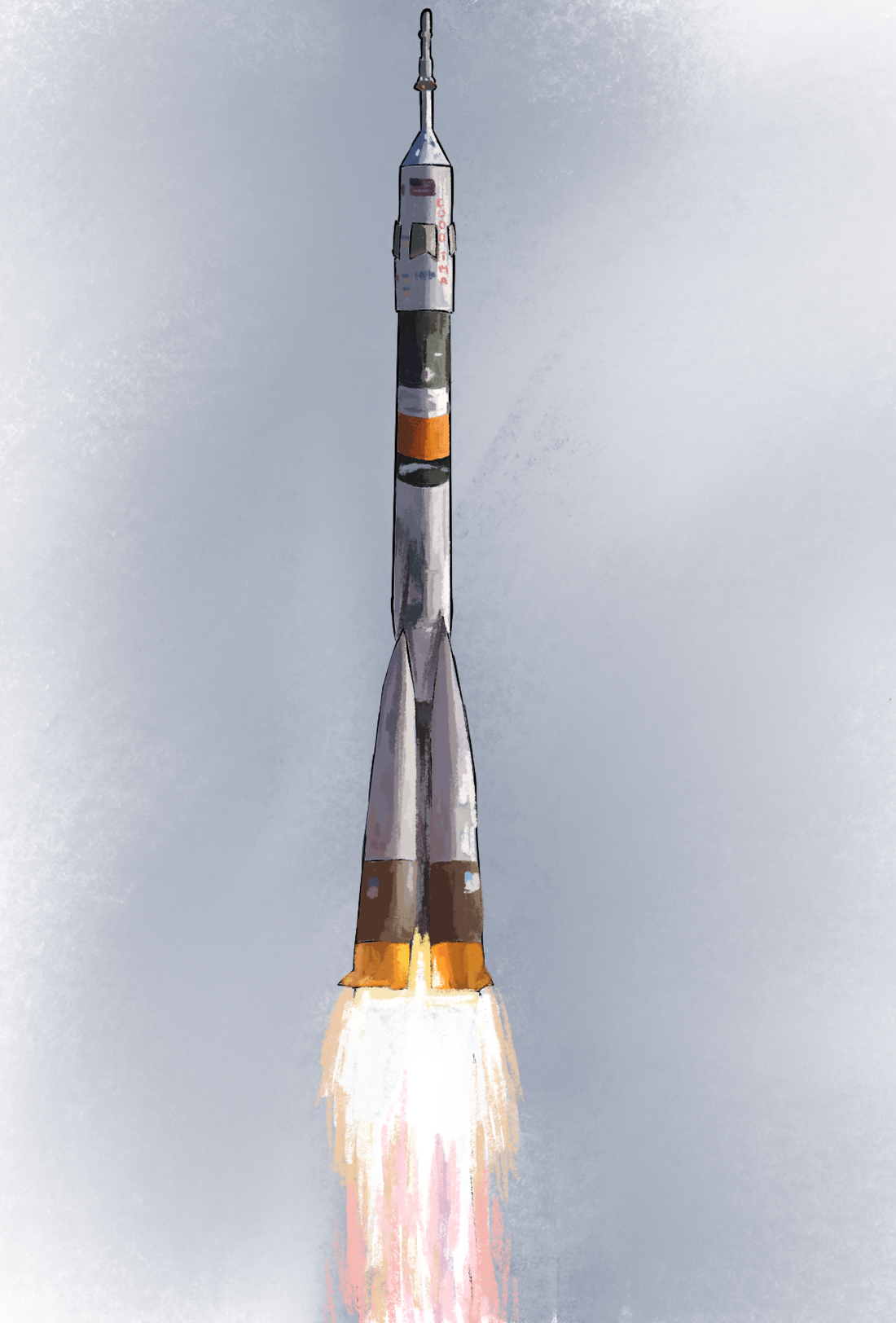
Millions of people around the world watched the Artemis II mission launch on April 1, 2026, at 6:35 pm. The mission was designed to launch four astronauts—Reid Wiseman, Victor Glover, Christina Koch, and Jeremy Hansen—on the first crewed flight beyond Low Earth Orbit (LEO) since 1972 and to pave the way for future lunar exploration and eventual missions to Mars.
For many, this recent exploration renewed a sense of interest in space that first began in the 1950s during what was coined the “Space Race”—a Cold War competition between the United States and the Soviet Union to achieve superior spaceflight capabilities. Yet this renewed interest also drew back attention to some of the major issues of space exploration, including the largely unregulated accumulation of what is known as space debris, the discarded human-made objects occupying LEO. Additionally, despite what seems to be two separated timeframes of interest, space exploration has continuously increased since the 1950s, with over 4,900 launches of rockets and satellites having occurred since then. A liftoff to orbit occurred every 28 hours in 2025, which broke the previous year’s record by nearly six hours. Along with each new launch, more space debris gathers, certainly not aided by an increase in unregulated commercial use by the private sector alone.
As the number of launches has increased over time, sponsors of such missions have shifted from governments to largely private corporations. This corresponds with the decrease in the direct use of space exploration as a geopolitical tool and is illustrated in the diminishing annual budget of the National Aeronautics and Space Administration (NASA)—from $67 billion in the 1960s to under $25 billion in 2024—indicating the growing presence of private corporations and replacement of the previous trailblazers of space technology. Furthermore, missions run by government organizations today tend not even to be fully controlled by said organization; rather, they typically involve partnerships with private enterprises for funding and increased technological expertise. NASA itself has even begun the use of Public-Private Partnerships (PPPs) for services from private firms such as SpaceX and Orbital Sciences to increase the cost-effectiveness of launches.
Space debris is known collectively as the group of discarded, human-made objects still orbiting the Earth in LEO. These objects come from launches and can be defunct satellites, unused rocket parts, and metal fragments from explosions or collisions between satellites, varying greatly in size, with some pieces being less than a millimeter wide. Yet, no matter the size of the space debris, it always poses risks. As launches increase, LEO becomes more crowded, leading to a greater number of collisions between objects. The average LEO impact velocity of space debris is 22,500 miles per hour, meaning that even collisions between the smallest pieces of debris can cause significant damage to existing human orbital structures like the International Space Station, which makes this issue even more pressing.
Continued accumulation of debris leads to greater risks of collision, creating a positive feedback loop that scientists have theorized may lead to what is known as the Kessler effect, where the amount of space debris in LEO could exponentially increase until there is too much for new launches to use the orbital zone. Already, NASA has conducted studies to indicate that this is a real possibility. A 2011 study found that even if the orbital lifetime of future debris was limited to 25 years, the amount of space debris would still increase. The presence of too much space debris would interrupt signals between space objects and pose a constant risk of damage to functional orbiting objects. This would permanently restrict new orbiting objects like satellites and rockets from occupying Earth’s orbit, closing off space as a global research frontier. Currently, space exploration is crucial for the development of new satellite-centered telecommunication for remote areas, climate and weather forecasting, and the creation of technology applicable on Earth.
Current and past space debris have already posed risks to missions. A French military satellite called Ceris was struck by debris from the Ariane 1 rocket in 1996, causing the satellite to begin to fall before it was reprogrammed. The International Space Station has also been barraged by space debris, creating a hole through a robotic arm in 2021. These collisions not only generate more debris, but also damage and slow existing missions. As levels of space debris grow and we seem to approach the Kessler effect, collisions will only increase in magnitude. It is these collisions, caused by unregulated missions not requiring tracking of orbiting objects, that contribute the most to the amount of debris. The 2009 Iridium-Cosmos collision of two satellites lacking proper spatial awareness warning systems is a key example of this, generating over 2,000 trackable pieces of debris.
For a topic with such large implications, it is shocking that so little international framework has been established to regulate actions. The Outer Space Treaty was written and signed in 1967 and emphasized that the peaceful nature of space exploration should be followed to benefit all of humanity. It also briefly touched on liability in space, keeping countries accountable for damages caused by their respective “space objects.” However, the document fails to expand much beyond this in specificity and certainly doesn’t extend into a discussion of private corporations (which, as previously mentioned, were less involved in space than they currently are). This leads to many corporations going under the radar of the international community for their own commercial interests, posing risks such as reduced accurate tracking of space debris; this is significant, especially considering that collisions between objects in space are increasing.
The first step in mitigating the amount of space debris orbiting in LEO is formulating new frameworks aimed directly at reducing space debris. This would involve adding upon the ideals presented in the 1967 Outer Space Treaty and addressing new changes in the space exploration of today. Also, avoiding large generalizations in main clauses would retain specificity of ideas and clarify goals for the international community to strive toward. Specific clauses should include mandatory removal of defunct orbital objects within ten years of the conclusion of missions, including satellites and used rocket parts. This prevents the increased risk that comes with the amount of time these objects spend in space, avoiding collisions and further debris accumulation by reducing space traffic as much as possible. Additionally, greater emphasis should be placed on mission circularity and further technological advancement in the interest of reducing space debris. This would include designing satellites to either burn up in the atmosphere upon mission completion or be reused, and utilizing technology such as laser ablation to directly remove space debris from orbit. While laser ablation, which involves using lasers to disrupt the orbit of the debris to change it such that it reenters the atmosphere, is still being tested, its potential allows for efficient removal of existing, circulating debris. Furthermore, countries should be increasing the number of PPPs, and regulating both public and private entities with regards to space debris. PPPs would ensure not only greater cost efficiency, but would also make use of available expertise. All such additional legislation and further measures, however, should be designed with not only large government-funded organizations in mind, but also smaller commercial enterprises.
Only when space debris is treated as a continuous and serious problem can international frameworks that successfully address it be established. This will ensure that as future generations of Artemis missions and beyond are launched, space remains a front of scientific innovation and magnificence for all.