
Reshaping Vision at Night
Orthokeratology involves wearing custom-fitted and specialized contact lenses to temporarily resolve vision issues by modifying the shape of imperfections on the eye’s surface layer.
Reading Time: 4 minutes
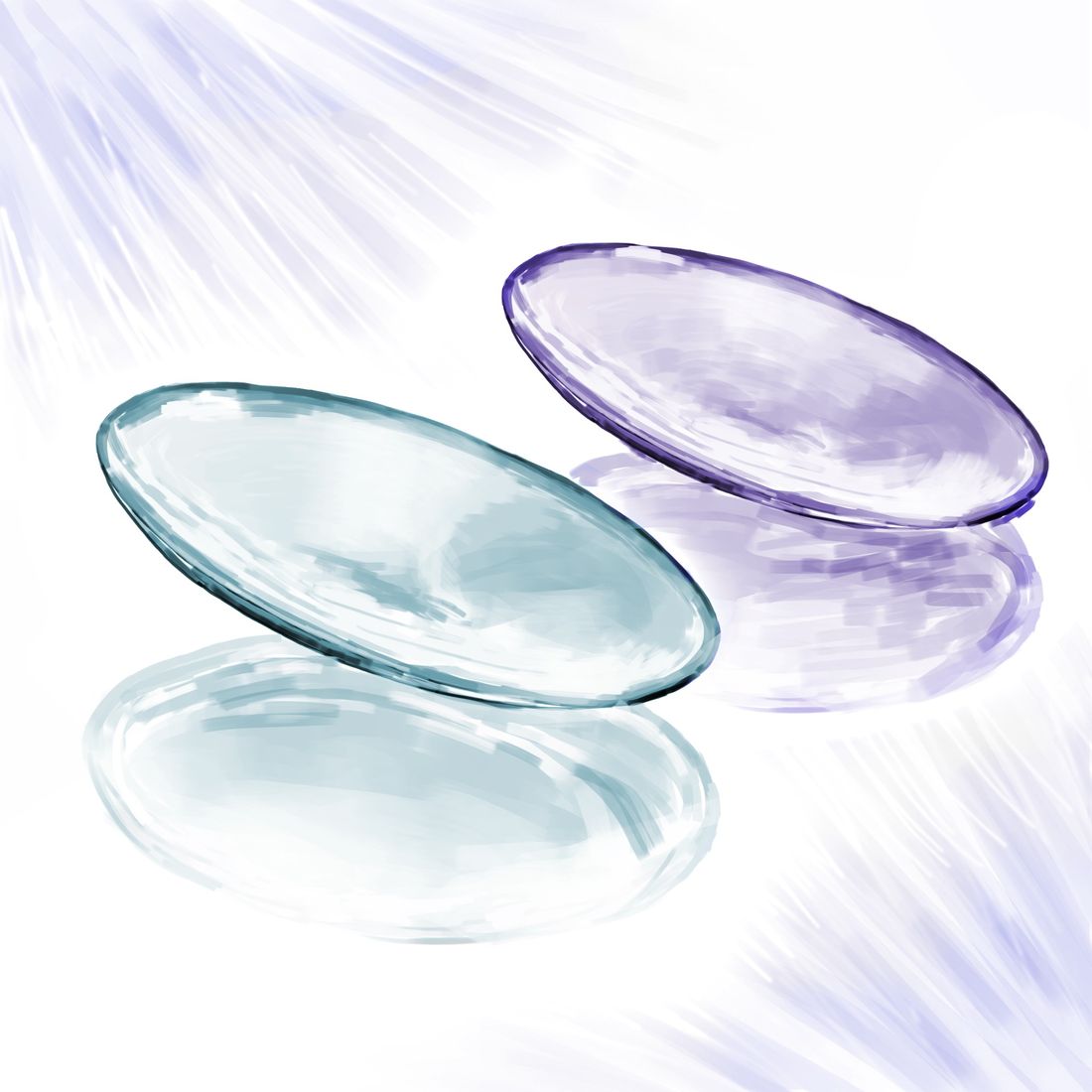
The most common vision correction devices include glasses, with early types developed in the 13th century, and contact lenses, which originate from the 1880s. They correct vision by using artificial lenses to bend light into rays that point accurately on the retina, allowing light to be processed into detailed images. Despite the irritation that comes with ill-fitting contact lenses or foggy and smudged glasses, these vision correction tools remain the most available and convenient options for vision enhancement. However, new technology has made vision correction possible without glasses or traditional contacts. Unlike most vision implements, specialized lenses used in orthokeratology (ortho-k) break the mold of correcting vision during active hours: while glasses and contact lenses act as a replacement for the cornea, the outer surface of the eye that focuses light on the retina to create accurate vision, ortho-k lenses mold the cornea into a corrected structure during sleep to improve eyesight. After waking up, sight improvements last from one to three days, making the use of corrective lenses during the day unnecessary.
The lenses are customized to fit the patient’s cornea, the eye’s outermost layer. The fitting process involves photographing the cornea with a corneal topographer to identify corneal defects. A corneal topographer shines lights onto the eye and records the reflections; the images are used to produce maps using colors to represent the width and height of curves on the cornea. Deformations are flattened or curved back to a normal shape by a lens placed above the epithelium, the exterior lining of the cornea. Between the epithelium and lens are tears that create hydraulic pressure, shifting corneal cells and flattening the cornea. The firmness of the lenses assists with shaping the cornea to focus light more precisely on the retina, which improves the conversion of light into electrical signals. This conversion, called phototransduction, occurs in photoreceptors shaped as rods, which recognize shades of darkness and motion, or cones, which perceive colors and details. Accurate projections of light allow pigments to absorb more light in rods and cones, causing biochemical reactions that modify electrical charges in photoreceptor cells and form signals. Then, the electrical signals are sent through the optic nerve to the brain, forming clearer visuals.
The cornea’s avascularity, or lack of blood vessels, makes it dependent on external oxygen flow. In addition, oxygen-rich blood is especially necessary for the retina and optic nerve to function properly. Ortho-k lenses are made from gas-permeable material that prevents oxygen deprivation, leading to inflammation and dryness in the cornea or corneal edema, the swelling of the cornea due to lactic acid accumulation. By ensuring a stable oxygen level in the cornea, the material also benefits tear production, letting ortho-k lenses shape the cornea correctly.
Ortho-k is accessible in most countries and is particularly widespread in Asian-Pacific regions where myopia, also called nearsightedness, is common. The lenses might appeal to individuals seeking an alternative to eye surgery for treating myopia and astigmatism, which cause blurry or distorted vision. Patients susceptible to dry eyes may avoid surgical procedures because many vision surgeries damage corneal nerves that control tear production, and increase dryness. Both conditions are caused by irregular curvatures of the cornea that make light focus in front of instead of on the retina. These conditions can be treated when ortho-k lenses flatten the curved cornea, resulting in accurate bends of light. Ortho-k lenses can slow the development of myopia in children, whose developing eyes are more adaptable to vision corrections. They can also lessen symptoms of presbyopia, an eye condition that worsens with age. Presbyopia causes the lens behind the cornea to stiffen, impairing the function of the ciliary muscle that contracts or relaxes the lens. The lens functions similarly to the cornea, and its flexibility allows light to bend and settle on the retinal surface. Ortho-k lenses can manage presbyopia’s effects by reshaping the cornea and increasing the focus of light rays to compensate for the limited accuracy and movement of the lens.
Furthermore, ortho-k provides advantages over ordinary contact lenses that may demand constant and costly replacement, be impractical for athletic activities, or worsen dryness by absorbing tears. Ortho-k lenses promote oxygen circulation and require less frequent replacement, usually ranging from six months to a year. The lenses are ideal for those who want to avoid permanent corneal changes because the lenses’ effects are easily reversible. When patients stop wearing ortho-k lenses, their eyesight will revert to their condition before starting ortho-k, allowing patients to seek new treatments such as multifocal soft contact lenses that are more suitable for severe astigmatism. This is beneficial since individuals who use any type of in-eye lenses are prone to corneal infections, which can damage epithelial cells in the cornea and weaken the effects of ortho-k lenses.
Despite the range of benefits, ortho-k presents maintenance and pricing challenges. Ortho-k lenses must be worn every night to avoid weakening vision corrections, as the cornea’s altered shape can revert to its misshapen form in one to three days after discontinuing use. This is because the treatment does not provide a permanent solution: ortho-k manages sight conditions in the long-term, and its results are maintained by wearing the lenses nightly. Additionally, most ortho-k lenses have limited effects on high astigmatism because it is difficult to settle the lens in a stable position. Patients must practice thorough hygiene, as failing to clean the lenses regularly can increase their risk of side effects such as bacterial keratitis infection, resulting in vision impairment, pain, and redness. The lenses alone are highly priced, ranging between $1,000 to $4,000. The fitting process, routine checkups, and its specialized material factor into the large expenses of the treatment.
Orthokeratology is an unobtrusive, temporary solution to eye conditions like myopia, astigmatism, and presbyopia that impair the cornea and lens. Ortho-k lenses are less bothersome than contact lenses because they are used while individuals are asleep instead of during the day. Although ortho-k presents drawbacks by increasing the likelihood of corneal infections or requiring consistent use and precise cleanliness, the lenses’ limited results on severe astigmatism may be refined with further developments in its curved design. Ortho-k lenses have advantages such as temporarily improving sight issues in a shorter timeframe or even delaying their onset, allowing individuals to be free from vision troubles in daily life.