
You’re Scared of Zombies, But Has Zombie Cell Aging Already Infected You?
Zombie cells may sound frightening, but they are actually a very normal part of human physiology; nonetheless, they contribute to several health conditions.
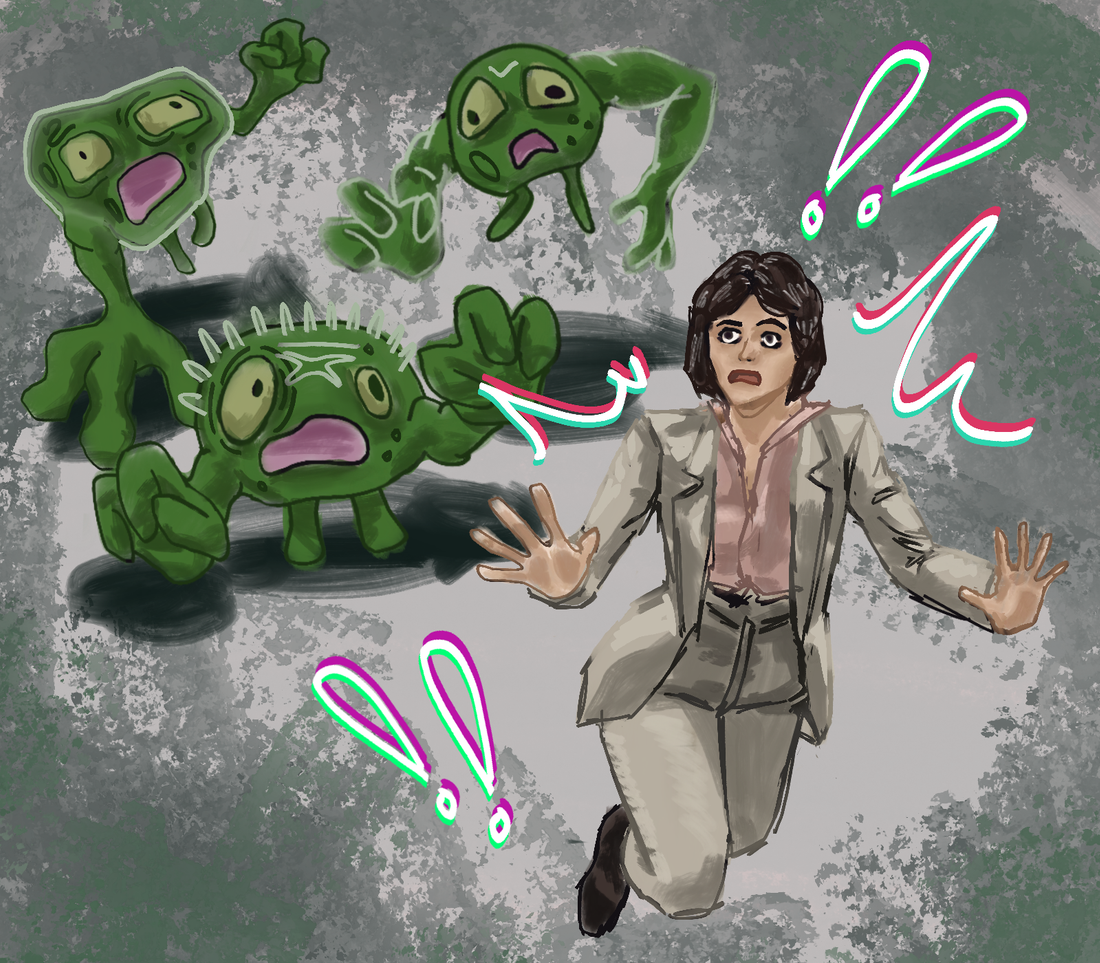
It’s Halloween night, and you and your friends are officially “too old” to go trick-or-treating. So instead, you challenge each other to sprint to the neighborhood cemetery, only to come face-to-face with a standing body. You take in the sickly-thin figure, the green tinge to their creepy skin, and the bulging eyeballs. It finally clicks: the very creature you believed was mythical now stands less than two feet away from you.
As frightening as this sounds, you can rest assured that zombies are, in fact, not real. But zombie cells most definitely are.
Senescent cells, also known as zombie cells, start like any other cell in the body: the human immune system constantly gets rid of old, dysfunctional cells in order to keep tissues healthy. When a cell dies, it typically displays a protein known as a macrophage on its surface, marking itself as a target for immune cells. These immune cells then proceed to engulf the cell in question. However, certain cells will refuse to undergo this programmed cell death (apoptosis) and will try to avoid engulfment by displaying surface proteins such as CD47-SIRPα and CD24-Siglec10. If these are strong enough, macrophages will fail to recognize them, allowing them to accumulate.
This process of cell engulfment, however, becomes significantly less effective as we age due to immune function decline, making it increasingly difficult for macrophages to spot these zombie cells. Hence, in a senescent state, the dead cells remain in human tissue for several years, releasing chemicals known collectively as senescence-associated secretory phenotype (SASP). SASP secretes pro-inflammatory proteins including cytokines, chemokines, growth factors, and matrix remodeling factors that ultimately promote cellular damage and pose a serious threat to surrounding cells.
There are several means through which cell senescence can occur, each with a distinct cause. The first variant is replicative, which is also the most classic method of senescence. This is when a cell has reached its maximum number of cell divisions and cannot further replicate. This is often due to telomere shortening, which is when the DNA sequences at the extremities of chromosomes become too short to protect the chromosome ends, giving the cell no choice but to stop dividing.
The second type is oncogene-induced senescence. Proto-oncogenes are genes responsible for regulating cellular growth and cell division. When these genes are overexpressed, they allow for abnormally higher levels of cellular division, which can cause tumors. For instance, a member of the oncogene family known as the RAS gene, when mutated, can cause extreme and unchecked cell proliferation. Though the tumors produced are often benign, or non-cancerous, prevention is necessary: the cell activates tumor-suppressing pathways including proteins that belong to the INK4 family, which help inhibit the activity of cyclin-D-dependent kinase enzymes to prevent phosphorylation (the addition of a phosphate group to a molecule). Though this helps prevent uncontrolled cell division and even cancer, even these pathways can trigger stress-induced cell senescence.
Stressors include oxidizing agents and free radicals, which are created naturally by the human body but can also enter through outside factors such as certain lifestyle habits. These include inhaling cigarette smoke, excessive drinking, exposure to certain chemicals such as asbestos, and even daily air pollution. These can cause single-strand breaks (SSBs) in the cell’s DNA. SSBs trigger a DNA-damaging response, consequently activating a signaling pathway that sends healthy cells into a state of senescence.
The fourth form of senescence is referred to as irradiation-induced. Similar to stress-induced senescence, stress is the primary driving factor, particularly UV radiation. UV radiation comes primarily from the Sun and other stars, in addition to artificial sources such as tanning beds and industrial equipment like certain lasers. Radiation ionizes DNA nucleotides, which breaks necessary chemical bonds that increase cellular senescence in the skin.
Ultimately, zombie cells accelerate aging through two principal means: chronic inflammation and stem cell exhaustion. As mentioned, the release of SASP by senescent cells leads to the accumulation of inflammation. This inflammation can increase the risk of blood clots, neurological disorders, and tumors. Senescence has also been shown to contribute to several age-related diseases, such as cancer, Alzheimer’s, diabetes, and heart disease. For Alzheimer’s specifically, SASP again plays a crucial role: the chronic inflammation that it infamously produces damages surrounding brain tissue and slows down the removal of neuronal debris, speeding up neuron loss.
Senescent cells are also capable of disrupting the joint networks that connect stem cells, which not only hinders communication between these cells but also their structural integrity and growth. Stem cells are crucial for the human body because they act as its raw material; without them, there would be no available cells to specialize into the essential cell types such as blood, heart, and nerve.
Our skin is also constantly exposed to UV light, making the accumulation of irradiation-induced senescent cells contribute to a weakened skin barrier, making skin more prone to visible signs of aging such as sagging and wrinkles.
Senescent cells are an inherent facet of growing older, and scientists are yet to discover a way to completely eradicate all senescent cells from the human body. However, certain senotherapeutic molecules—a class of strategies to target cellular senescence—can prevent their accumulation. Senotherapeutics include small-molecule drugs such as ABT-263 that selectively trigger apoptosis in senescent cells; they have been tested on mice and have shown promising results in targeting senescent cells to reverse liver damage, as treated livers were reported to be smaller and a healthier shade of red instead of the yellow tint characterizing a fatty liver. However, these drugs are too toxic for general use in humans.
Peptides, most notably OS-01, also exist in the form of senotherapeutic molecules. OS-01 in particular has been shown in lab tests to reduce zombie cells in human skin cell samples by up to 50 percent when applied topically. It functions by blocking the SASP factor, which limits the spread and, thus, scope of senescence. This gives the immune system sufficient time to catch up and reduce the senescent cell count.
At the end of the day, aging is not something to fear; we are all aging, whether visibly or not. So, if you ever come across a zombie and catch sight of its wrinkles and creepy skin, don’t judge: it probably just has a lot of zombie cells.