
The New York Earth Room: Your Actual Breath of Fresh Air
The New York City Earth Room is a breath of fresh air (literally and figuratively).
Reading Time: 3 minutes
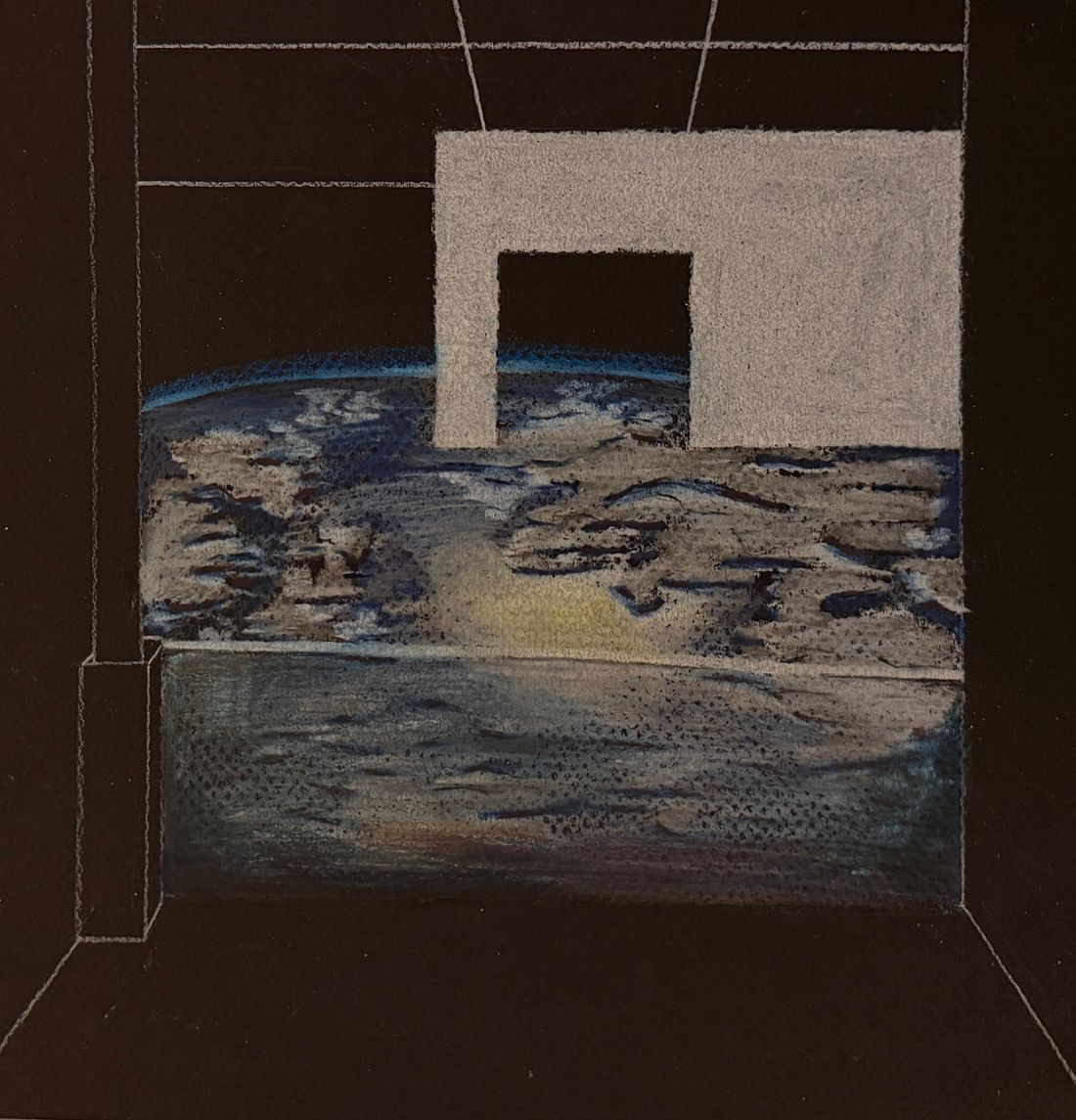
“I went to the woods because I wished to live deliberately, to front only the essential facts of life, and see if I could not learn what it had to teach, and not, when I came to die, discover that I had not lived.”
—Henry David Thoreau, Walden
Today, locals and tourists alike swarm the streets and sidewalks of SoHo, one of New York City’s go-to destinations known for its industrial cast-iron buildings, luxury and boutique shopping, and commercial art galleries and installations. Hidden in the heart of all the hustle is an unusual sculpture: a white room full of dirt.
American artist and sculptor Walter De Maria (1935-2013) created three Earth Rooms over the course of his lifetime. His first was created in Munich, Germany in 1968, followed by a second in Darmstadt, Germany. His third and only surviving installation was created in 1977 and became a permanent installation in 1980. It is located right in the heart of SoHo, at 141 Wooster Street, secluded in the second floor of a loft. The small metallic directory plaque mounted on the left of a standard, single gray storefront door is the only thing informing visitors about the installation. There’s something very unusual about having to walk up two narrow flights of stairs to an empty white room filled with dirt. Its seclusion invites tranquility and maybe even nostalgia, the same feeling as sitting on the corner window seat of a subway car or the childhood comfort of curling up beneath a blanket fort.
The New York Earth Room is labeled by the Dia Art Foundation not as a room, but an “interior earth sculpture”: 250 cubic yards of earth, 3,600 square feet of floor space, 22-inch depth of material, and a total weight of 280,000 lbs. Most sculptures, defined by Merriam Webster as “three-dimensional work[s] of art,” feel untouchable and sterile, barricaded by velvet ropes or the black “Do Not Cross” tape a few feet away. The intrusive human desire to simply walk forward and step onto the earth, to touch it, is undeniable, yet painfully unfulfilled. The Earth Room is not an extension of the floor; it sits elevated above floor level. The viewer is encouraged to experience Earth as a three-dimensional volume: earth, with depth, barricaded by a glass panel. Every fleeting second, people look forward, walking across the surface of the Earth, which is actively experienced as a linear, continuous, flat plane. Rarely does it cross one’s mind that they are one of 8.3 billion people sharing a sphere suspended in space. The Earth Room is meditative; it makes us look past the world’s heavy commercialization. This is not dirt, or soil that can be bought in 16-quart, bright-yellow plastic bags, but pure earth, absent of concrete and city-paving: a colorful, healthy blend of terracotta, auburn, umber, and charcoal.
The Earth Room is one of many examples where art is not only in physical representation, but in active experience. A major highlight of this experience is the smell. Immediately upon entrance, there's this overwhelming aroma: the fragrant infusion of tea steam moments before drinking, or a forest post-rain: a bit bitter, dense, damp, and humid, yet minty and cooling. If smell could be translated into taste, it would be the first sip of a roasted, citrus-infused espresso, slightly cooled but still warm. But what really makes the smell so distinct is its unfamiliarity. A reminder of the world’s detachment from Earth, where, of course, climate change, extreme air pollution, and a decline in biodiversity are just some contributing factors. The vacant white room directly across from the viewer, perhaps the most contemplative part of the sculpture, acts as a mirror, forcing the viewer to contemplate and compare their urbanized environment to the barren earth.
The New York Earth Room is a breath of fresh air in so many ways. It gives the gift of boredom and allows for a temporary sanctuary of nothingness from fast-paced reality, a rare chance to experience the world in its purest, fullest form.