The Language Privilege Paradox
The global dominance of English makes it easy for many Americans to remain monolingual, yet consequently causes them to live in a monolingual bubble that limits their cognitive capabilities and ability to connect with diverse perspectives.
Reading Time: 4 minutes
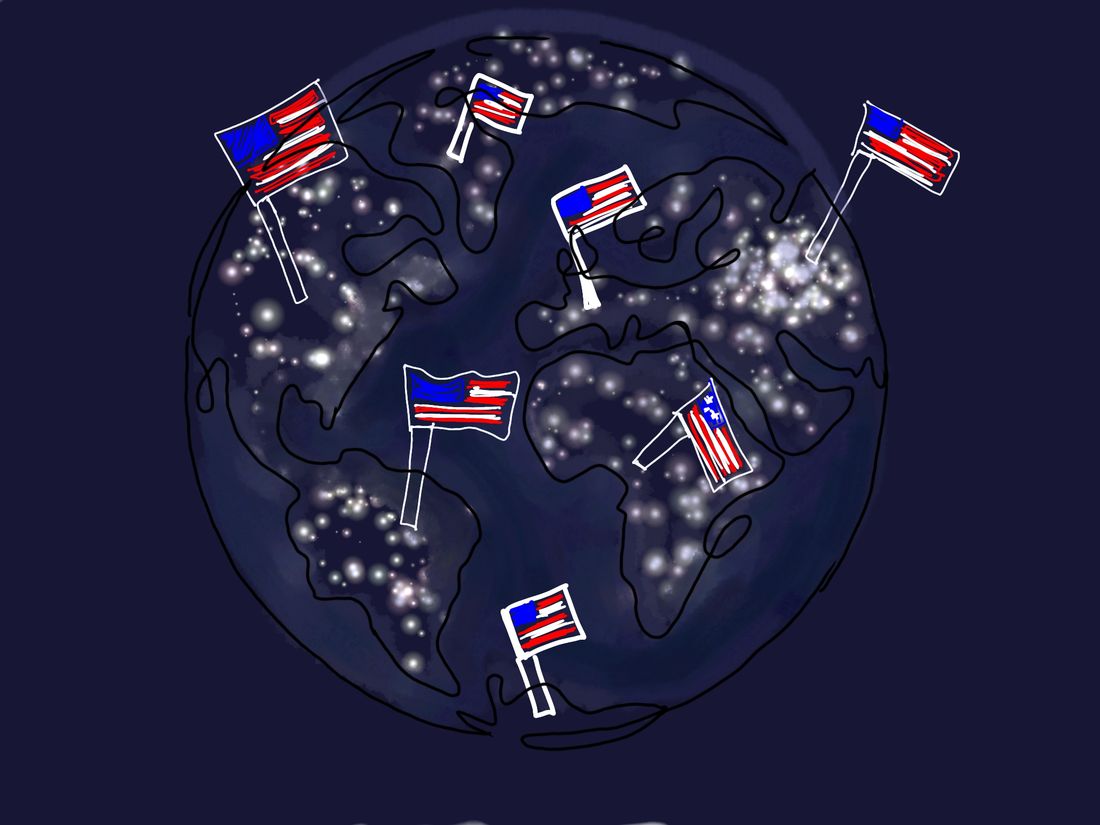
Upon arriving in Italy for the first time, I immediately regretted not trying to learn basic Italian. The second I got off the plane, I beelined for the nearest coffee shop. I hurriedly googled how to order a cappuccino in Italian, and in a pathetic attempt, tried to repeat the translation to the barista. She responded, laughing, in perfect English. It was then I began to see how privileged we English-speaking Americans are. In Rome, nearly everyone who works in service speaks English, and even in the “rifugios” (remote huts along the many trails in the Dolomites), all of the workers were able to fluently speak in Italian, English, Austrian, German, and sometimes French. In short, they accommodate us, and we don’t even meet them halfway.
Amid a multilingual world, the U.S. remains a very monolingual country, with 80 percent of Americans not speaking a second language. It makes sense; most English speakers feel no pressure to learn other languages. In New York, we live in an ultra-diverse bubble, but the average American will rarely or never leave the country, nor interact with other language-speakers on the daily. The country is so big and has such a diverse economy that there’s no pressure to move elsewhere for specialized jobs or better opportunities. And unlike Italy, you only need to know English to get a job in tourism or service in America.
In other countries, speaking English is seen as a ticket out of poverty. Luis von Ahn, the founder of Duolingo, grew up in Guatemala and, having learned English at a young age, wanted everyone to have the same access to such an indispensable language. During a talk he gave at a business school, he said, “Knowledge of English, in most countries in the world, can significantly increase your compensation. You’re a waiter, you learn English, now you’re a waiter at a hotel making more money.” This disparity explains why multilingualism is vital in many parts of the world, while in America, it remains a personal choice.
Additionally, the internet, our best friends (iPhones), and new technological advancements are making it even easier to get by without having an understanding of multiple languages. In today’s world, you have the ability to Google Translate 250 other languages instantaneously. You’re traveling and don’t understand the menu at a local restaurant? Ask ChatGPT what to order! There are even glasses you can buy that will give you real-time, in-ear translations so you can have a conversation in a language you don’t speak. These developments have made it even easier for Americans to avoid the work involved in learning another language.
Despite having all the same domestic advantages as the U.S., Europe and Canada have managed to integrate multiple languages into their culture and school systems in a way that the U.S. has failed to replicate. Part of that is cultural. Today, 86 percent of European Union (E.U.) citizens believe it’s important for everyone to speak another language, and an additional 84 percent think regional and minority languages should be protected. European education systems reflect the value they put on multilingualism. In Europe, students typically start learning their second language at prime language learning time—between ages six and nine. Many E.U. countries even require learning a third language in high school.
For them, language learning isn’t just out of necessity, but a desire to understand each other and make connections with more people. But understanding multiple languages doesn’t just give you social benefits; there is a lot of research supporting its cognitive benefits as well. Bilingual students have been shown to academically exceed the performance of their monolingual peers due to the increased flexibility that knowing multiple languages gives your brain. Additionally, studies show that multilingual students have enhanced creativity, better problem-solving skills, longer attention spans, and improved memory. Multilingualism isn’t just a useful skill—it’s an investment in your brain’s ability to perform at its best.
Despite the numerous benefits, America has tried to erase multilingualism in immigrant communities. This cultural silencing—driven by xenophobia and “English only” legislation—led to the intentional isolation of immigrant communities. A lot has changed since then, yet the pressure to assimilate has never completely disappeared. In America, adopting English is imperative for jobs and education. Because of these challenges, American immigrant families struggle to maintain their language heritage, and the majority of their languages don’t make it through the third generation.
Today, a lot more Americans are open to bilingual education, yet one of its greatest modern-day barriers is that the school system doesn’t prioritize language in a way that a truly multilingual society does. Unlike Europe’s system, most language programs don’t begin to get serious until high school, which is past the window for easy language learning. In my middle school, we didn’t start learning French (which was the only language offered) until seventh grade. And after early-on budget cuts, the class had been cut to only two short periods per week. At the end of the two years, we walked away with nothing to show.
When you actually learn a new language, you form a bond with it. It inspires you to meet new people who speak that language, to travel to those places, and to understand the history of its origin. It teaches empathy and understanding towards people outside of your nationality. As a monolingual American myself, I feel robbed of the opportunity to immerse myself in other languages early on. I think about all the perspectives and nuances that understanding other languages gives you, and it makes me sad to think I am still so limited to a single linguistic perspective—the American way of being. But it’s not too late. J'étudie beaucoup.