
The Hantavirus Panic Spreads Faster Than the Virus
As the recent hantavirus outbreak on the MV Hondius jumpstarted online speculation and theories, the reality of hantavirus is less terrifying: it’s not likely to become a pandemic or even cause a global outbreak.
Reading Time: 7 minutes
The Dutch nature cruise ship MV Hondius docked in Teneferie, Canary Islands, on May 10, 2026, after three passengers died from hantavirus and eight more contracted the virus. Early symptoms include fever, fatigue, and muscle aches, while later symptoms include shortness of breath and chest tightness. The outbreak on the MV Hondius is special for being transmitted through human-to-human contact, as hantaviruses are typically transmitted to humans through human contact with rodent fluids. The strain on the MV Hondius, the Andes strain, is the only hantavirus strain that has been documented to spread between humans. After major speculation and fears of another worldwide pandemic similar to COVID-19, false online theories gained attention on social media. Despite some public health officials and online forums claiming that the first infected passenger contracted hantavirus from a popular bird-watching landfill site, these claims remain unproved and improbable.
What is hantavirus?
Hantavirus is a family of zoonotic viruses that we now know can cause severe and sometimes fatal diseases in humans. These viruses primarily spread through contact with infected rodents, and each of them are usually linked to a specific rodent species. In the United States, studies have found that around three percent of deer and mice carry the virus. Specific forms of this virus found in North, Central, and South America are mainly associated with hantavirus pulmonary syndrome, a serious respiratory illness that can progress rapidly and become life-threatening, often leading to sudden death. In Europe and Asia, hantaviruses are more commonly linked to hemorrhagic fever with renal syndrome, which mainly affects the kidney and blood vessels. This is a more severe and potentially life threatening disease that can affect the lungs. Many symptoms, such as muscle aches, dizziness, and chills, start to appear after one to eight weeks of exposure.
Hantavirus infections are estimated to cause between 10,000 and more than 100,000 cases worldwide each year. Although it is unlikely to contract them, hantaviruses are linked with a fatality rate of one to 15 percent in Asia and Europe and up to 50 percent fatality rate in the Americas.
How is hantavirus spread?
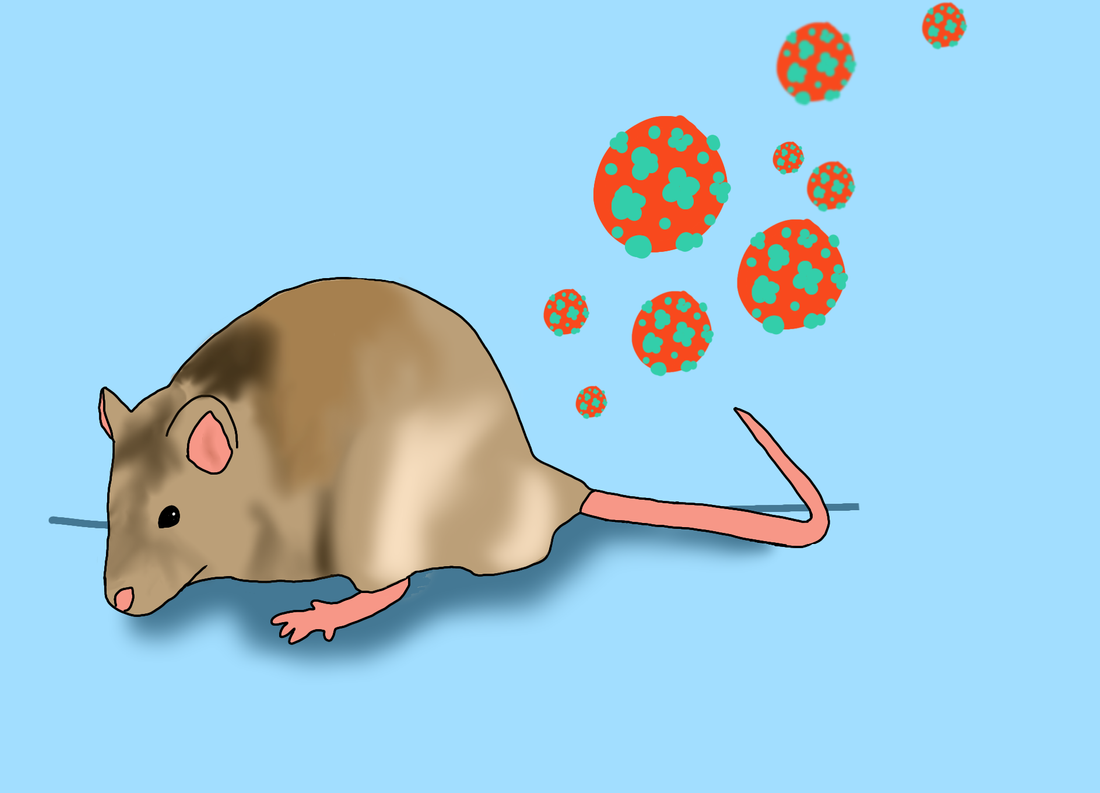
Hantavirus is primarily spread through the inhalation of aerosolized rodent urine, droppings, or other bodily fluids. Aerosolized particles are tiny particles suspended in air, making them easy to inhale. Humans can be exposed to these particles through prolonged contact with rodents, such as living in homes or working in rodent-infested spaces. In North America, the rodents that carry hantavirus are deer mice, white-footed mice, rice rats, and cotton rats. Rodents carrying hantavirus are asymptomatic, meaning that they exhibit no symptoms or indicators of sickness, which makes it hard for humans to identify hantavirus-infected rodents. Rodents have carried hantavirus for millions of years, and the virus has co-evolved to not affect their rodent hosts adversely.
Only one strain, the Andes strain, has been reported to spread through human contact. Still, the Andes strain is mostly transmitted through rodent-to-human contact, as only two percent to five percent of all Andes strain cases were transmitted through human-to-human contact. Because human-to-human transmission of hantavirus is so rare, research on the mechanisms of this transmission is limited; researchers still aren’t sure if humans can have asymptomatic cases of hantavirus. The World Health Organization reports that human transmission is associated with close and prolonged contact with a hantavirus patient in the early phase of illness, when the virus is likely most transmissible. Doctors and researchers report that staying within six feet of an infected person for 15 minutes or more can qualify as close and prolonged contact. Those who’ve come in close and prolonged contact with hantavirus patients are suggested to quarantine for 42 days, as symptoms can begin within four to 42 days of infection.
Although research on the mechanisms of hantavirus spread and infection is limited, American universities are currently on the front lines of emerging research. Emory University is currently treating two passengers related to the hantavirus outbreak, due to its robust specialized infrastructure and expertise in addressing high-risk diseases such as hantavirus. Other universities ready to accept more patients include Johns Hopkins University and the University of Nebraska. The University of Chicago, Vanderbilt University, and the University of Minnesota are all schools in partnership with response systems as well. Because universities are at the forefront of the hantavirus response, they are also able to gather more research in understanding transmission and developing better safety protocols. This isn’t a surprise, as universities have often been the first to make medical breakthroughs. However, with recent cuts in federal funding for research, notably cutting a project specifically designed to understand how hantavirus is transmitted from rodents to humans, research turnout may still be slow.
How does hantavirus infect host cells?
Hantaviruses enter the host cell and replicate through the non-lytic cycle, meaning that viruses spread to other cells by leaving the host cell through exocytosis instead of bursting the cell for virus release. Exocytosis is the process by which cells expel materials by enclosing them in a bubble-like membrane vesicle and pushing it out of the cell. Hantavirus attaches to cellular receptors and enters the host cell through endocytosis, the process by which cells take in materials by enclosing them in a vesicle and bringing them into the cell. Once in the cytoplasm of the host cell, the virus releases ribonucleoproteins, which are complex formations of proteins and RNA. The viral polymerase enzyme RdRp transcribes and replicates the RNA, meaning that it reads the virus RNA genetic code and creates new mRNA templates that the host cell uses to create new viral proteins and assemble new viruses. These new cells exit the cell through exocytosis to go on and infect other body cells.
Hantavirus mostly infects endothelial and epithelial cells, but can also enter and affect immune cells such as macrophages. Endothelial cells are thin cells that serve as the lining to the interiors of blood vessels, lymphatic vessels, and the heart. Epithelial cells line and protect the exteriors of bodily organs, including skin, blood vessels, respiratory tract, and more. Then, hantavirus travels through the bloodstream and inflames blood vessels and causes vascular leakage, which is when the blood capillaries leak. While hantavirus does not kill the host cells, it can make endothelial cells more permeable, which leads to the leakage of plasma cells and a decrease in blood pressure. When bodily fluids seep into lung tissue and alveoli air sacs, lung function is severely compromised and oxygen exchange cannot be performed efficiently. The blood passing through and leaving the lungs is heavily oxygen deprived, and when the heart receives oxygen-deprived blood, it can no longer pump effectively, thus dropping blood pressure. When oxygen levels drop to extremely low levels due to lung failure, patients can die. This is why hantavirus pulmonary syndrome is so deadly. In addition, leaky endothelial cells also damage blood vessel linings and walls, which especially impacts the kidneys, internal organs that process and filter blood, purifying blood by removing toxic substances. The resulting condition, called Hemorrhagic Fever with Renal Syndrome, is dangerous because blood vessel leakage can cause sudden cardiovascular failure and kidney failure, both of which are deadly.
Will hantavirus become an endemic or a global pandemic?
Many speculate that hantavirus may become endemic or even cause a global pandemic, especially because the Andes strain is capable of limited transmission between humans. However, large outbreaks still remain rare and transmission between people is considered uncommon.
A 2018 outbreak in Argentina shows the difficulty of sustained transmission. After one infected individual attended a birthday party with around 100 guests, approximately three additional people became infected. Although these individuals continued to attend large social gatherings, the outbreak ultimately resulted in just 34 confirmed cases. Many public health measures, including quarantine, successfully contained the outbreak, in which more than 80 healthcare workers exposed to patients did not become infected while taking protective measures. Researchers have not identified any current Andes virus strains that would suggest increased transmissibility.
Are there any treatments for hantavirus?
There are currently no vaccines to prevent hantavirus or medications to treat it, as doctors and researchers are still learning more about the mechanisms of the virus infections in humans. Researchers are currently working on hantavirus vaccines, but development is still in the very early stages, meaning that rollout could be many years in the future. The American pharmaceutical company Moderna and the Vaccine and Infectious Disease Organization in Canada are currently working separately on developing a hantavirus vaccine. Hantavirus vaccine development was largely neglected due to lack of commercial interest for such a vaccine, especially with low human-to-human transmission rates. Because hantavirus is still unlikely to become a large public outbreak, demand for a vaccine or medication is low, and we may not see a vaccine for a long time. Some researchers suspect that more deadly cases are caused from an immune system overaction, just like some severe COVID-19 cases.
The only medical support that hantavirus patients can receive are organ-support systems or medication that alleviates symptoms. For example, if a patient is experiencing pulmonary failure, they may receive oxygen therapy, fluid replacement, or organ support to lessen their symptoms, but there are no direct methods to combat the infection itself.
However, it is easy to prevent hantavirus from spreading. Keeping homes, schools, and workplaces clean and free of rodent infestations is the best way to prevent infection. It’s important to note that hantavirus is still incredibly hard to transmit from human to human, making it extremely unlikely to become an endemic or even cause a large outbreak. Governments across the world are making efforts to contain the small outbreak, meaning that it shouldn’t be a concern for the general public.