Reading Between the Lines: Stuzin’s New Media Literacy Class
Stuzin’s new Media Literacy elective is an exciting English elective that is imperative in navigating the growing media landscape of memes, artificial intelligence, and algorithmic filters.
Reading Time: 4 minutes
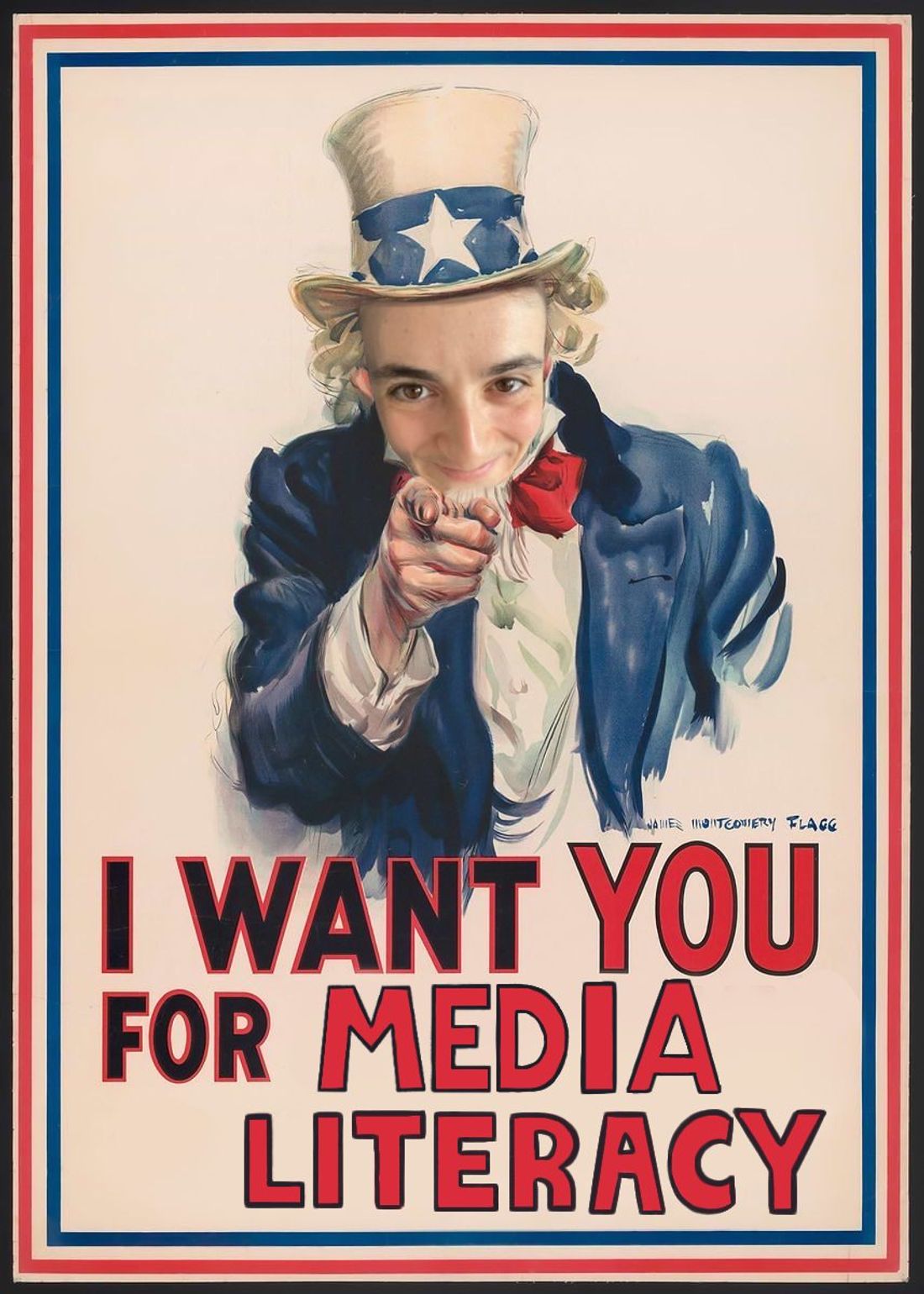
In a world where artificial intelligence (AI) is constantly improving, and also plaguing the internet with misinformation and seemingly real photographs, it is hard to tell what is authentic and what is not on the internet. Media literacy is a skill that has become increasingly important to learn; it addresses the dangers of misinformation. English teacher Lauren Stuzin recognized this and, with that recognition, developed a brand new elective, Media Literacy. In every hallway, one is guaranteed to see the eye-catching, funny, and informative posters advertising the class.
Media literacy is defined as “the ability to access, analyze, evaluate, and produce media in a variety of forms.” In other words, it is how one interacts with the content around them, advancing literacy to modern consumption. This includes the internet, social media, TV, and more. At Stuyvesant, Media Literacy is a single-semester English class that will be available to rising juniors and seniors in the fall. “[The course] will examine how media is constructed, circulated, and how it organizes the world. It will also consider how media shapes our sense of truth in an era of AI generation and algorithmic filters,” according to the class description shared by Stuzin. “[It] involves discussion and analysis, creative experimentation, and opportunities for students to help determine the direction of inquiry.” Essentially, the class provides students with the tools to ask the right questions about the media they see in their day-to-day lives.
As the name suggests, the class will be heavily centered around various types of media, including texts, films, works of both fiction and non-fiction, AI-generated content, and more. Some of the potential core texts for the course include: Susan Sontag’s On Photography, Neil Postman’s Amusing Ourselves to Death: Public Discourse in the Age of Show Business, and John Berger’s Ways of Seeing.
It won’t be easy to fit such a content-heavy class into one semester while fostering discussion and deep analysis. In an email interview, Stuzin explained, “Negotiating the scope of the syllabus, however ambitious, will be part of the fun for me and the students.” Additionally, Stuzin made sure to acknowledge that giving students an excessive workload in order to accommodate vast amounts of material is not a part of the plan. “[The] goal of this class is to change the way students think about the world, not cause them to pull all-nighters,” they added.
Stuzin’s current students are very excited about the course’s potential. Sophomore Isabel Clark explained, “I currently am in Stuzin’s Foundations of Literature class, and I find it very unique and interesting. Most of Stuzin’s teaching is grounded in discussion, and people are free to say whatever they think; it’s a very non-judgemental classroom. I would expect that to translate to the Media Literacy class because it will be a low-pressure environment with interesting topics [...] This class is very appealing both because of Stuzin as a person, and also because the content that Stuzin shared with us will be included.”
Word has spread about the class in a variety of ways, like through English teachers, friends, and most excitingly, the engaging posters found in every corner of the school. The posters are not only informative and creative, but are also a testament to some of the great media of the past century. Eye-catching designs feature everything from Stuzin’s face in lieu of Uncle Sam’s in the iconic “I Want You” poster from World War I, to Tung Tung Tung Sahur memes, all with the same theme: Stuzin wants you for Media Literacy. Stuzin explained that they wanted the posters to feel like a perfect explanation of what media literacy is. “The flyers are intentionally a little manipulative—they’re meant to blur the line between sincerity and parody, and function as a mini Media Literacy lesson,” Stuzin reflected.
In putting these posters up on all floors of the school, Stuzin requested the aid of their students. Beyond the placement of the posters, Stuzin also wanted to incorporate the input of their students in the designs. “I worked on the designs in Canva, but my amazing students steered me in the right memetic direction,” they said.
When asked about how they came up with this class, Stuzin shared, “I’m [. . .] inspired by the existential dread of opening up my phone every morning.” This feeling of “existential dread” is familiar [to] anyone navigating today’s complex and often misleading digital world. After taking the class, students will be equipped with the tools and knowledge to confidently discern between what is real and what is not, and to identify nuance.
The class’s stark difference from a traditional Stuyvesant English class is what makes it so exciting. After reading Macbeth, The Metamorphosis, and The Great Gatsby in a full-year English class, it is easy to lose sight of how important literacy is as a skill in the real world. Stuzin created a class that is engaging, universal, and important for the Stuyvesant community. Although it is still in its early stages, it is likely to transform the way students interact with the world around them.