
Pollen: A Microscopic Trigger of Macroscopic Reactions
Pollen, despite being essential for economic stability and plant reproduction, can trigger a complex immune response that can lead to seasonal allergies.
Reading Time: 3 minutes
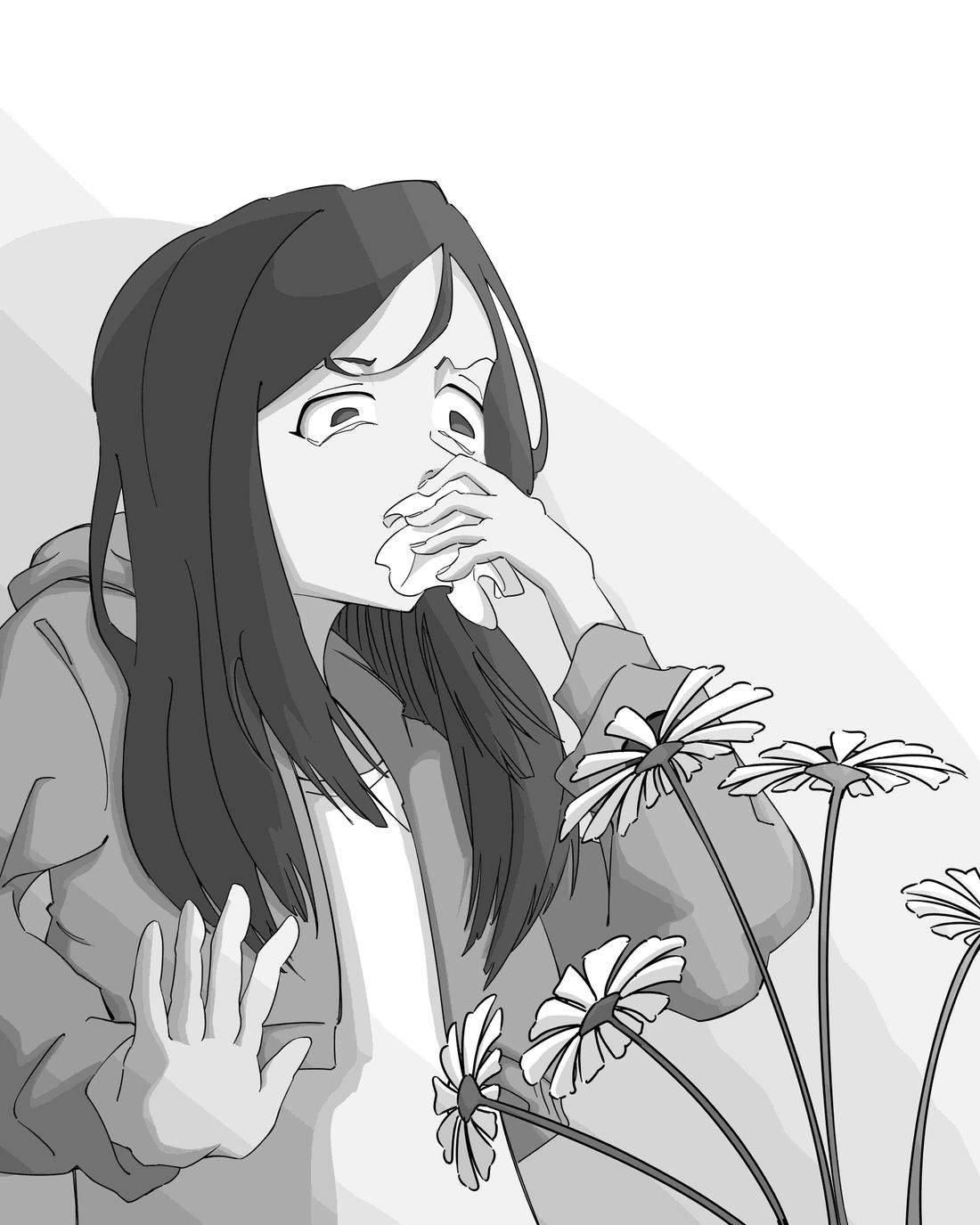
Spring: the time of picturesque cherry blossoms, warm weather, and a surplus of runny noses, sneezing, and itchy eyes. These symptoms are caused by pollen—the miniscule reproductive organs produced by grass, trees, and weeds. In the United States alone, approximately 80 million people suffer from this seasonal allergy, commonly known as allergic rhinitis or hayfever. Unfortunately, this statistic is expected to increase as factors like climate change contribute to extended and more severe pollen seasons.
Pollen is a powdery substance produced through meiosis by seeds of plants for reproduction. Varying in size and shape, it is composed of microscopic grains containing sperm cells. The initial form of pollen created by meiosis, the process of cell division for sex cells, are called microspores. Through a process called microgametogenesis, these microspores mature into more developed pollen, with the creation of two layered walls: intine and sporopollenin exine. Intine—the thin, inner layer—is primarily made of cellulose and pectin and plays a role in the germination of pollen tubes, which are used to deliver sperm cells for fertilization. Sporopollenin exine—the durable, outer layer—is made of an organic biopolymer that allows pollen to resist decay.
The grains themselves have two male gametes (mature reproductive cells) and are located in pollen sacs at the anther part of the stamen (male reproductive organ), which surrounds a carpel (female reproductive organ), allowing for efficient reproduction. Grains of pollen settle on a flower’s stigma, the entrance to the ovary to eventually pollinate the flower, and can either pollinate the same plant that it’s made from (self-pollination) or can be carried by vectors like wind, animals, and water (cross-pollination).
A pollen allergy suggests that the human immune system mistakes the pollen grains for dangerous invaders, triggering an overreaction. The immune system is designed to protect the body from harmful invaders like bacteria, viruses, and pollen. It does this by differentiating body cells from the foreign substances it deems harmful and having white blood cells try to destroy these substances.
When pollen first enters the body, specific immunoglobulin E (IgE) antibodies bind to mast cells (immune cells that are found in connective tissue like the skin) and basophils (white blood cells that can produce histamine—a chemical compound involved in local immune responses and regulating other body functions). When the body is reexposed to pollen after the initial exposure, the pollen binds to the IgE already on mast cells, triggering the mast cells to break open (degranulation) and release histamine. It is this release of histamine that causes the inflammation and mucus production, symptoms commonly associated with pollen allergies.
Pollen triggers the immune system in many ways. Water-soluble proteins, often glycoproteins, on the pollen grain are released from pollen in the mucous membranes of the eyes, nose, and respiratory tract. The allergens inside pollen come out through the germination pore, causing the exine to break and release even more allergens like NADPH oxidases, proteases, lipids, and other cytoplasmic particles. These water soluble proteases also damage epithelial cells—specialized cells that form tightly packed sheets around skin, organs, and glands and act as barriers—by breaking down epithelial junctions allowing allergens to go deeper in the nasal cavity causing sneezing, runny nose, congestion, and more. Furthermore, intrinsic NADPH oxidases generate reactive oxygen species that can trigger IL-8 (interleukin 8, a pro inflammatory cytokine) release and lead to further allergic reactions. Weather conditions can also affect the severity of pollen allergies with high humidity and heavy rain causing pollen grains to rupture and release even smaller “sub-pollen particles” (< 2.5 μm) that can penetrate into the lower airways (trachea, bronchi, and alveoli).
While pollen allergies are arguably some of the worst parts of spring, there are ways to minimize the effect that pollen has on your immune system. For instance, reducing exposure and taking antihistamine medication—such as zyrtec, claritin, and allegra—may reduce symptoms. Alternatively, High Efficiency Particulate Air filters in air conditioning systems can be used to capture small particles (as small as 0.3 microns) including pollen, preventing harmful exposure indoors.
Though it may seem that pollen is the enemy out to cause discomfort, it is important to understand that pollen is vital for continued plant growth, economic stability, and biodiversity. Without pollen, plants are unable to grow and provide food for animals. Furthermore, pollen is critical to fields like palynology, where its analysis could help understand which plants were prevalent during different eras of Earth’s history. Using CRISPR gene editing, RNA interference (RNAi), and gene silencing sprays, scientists are also now trying to silence or completely knock out the genes of the allergy-producing proteins. With successful results, we can hope that one day we are able to live in a society where pollen doesn’t give us the sniffles.