
Natural Gas and the Closure of the Strait of Hormuz
A description of the role of natural gas in the economic and scientific worlds and the challenges the world is facing due to the ongoing conflict in the Middle East.
Reading Time: 3 minutes
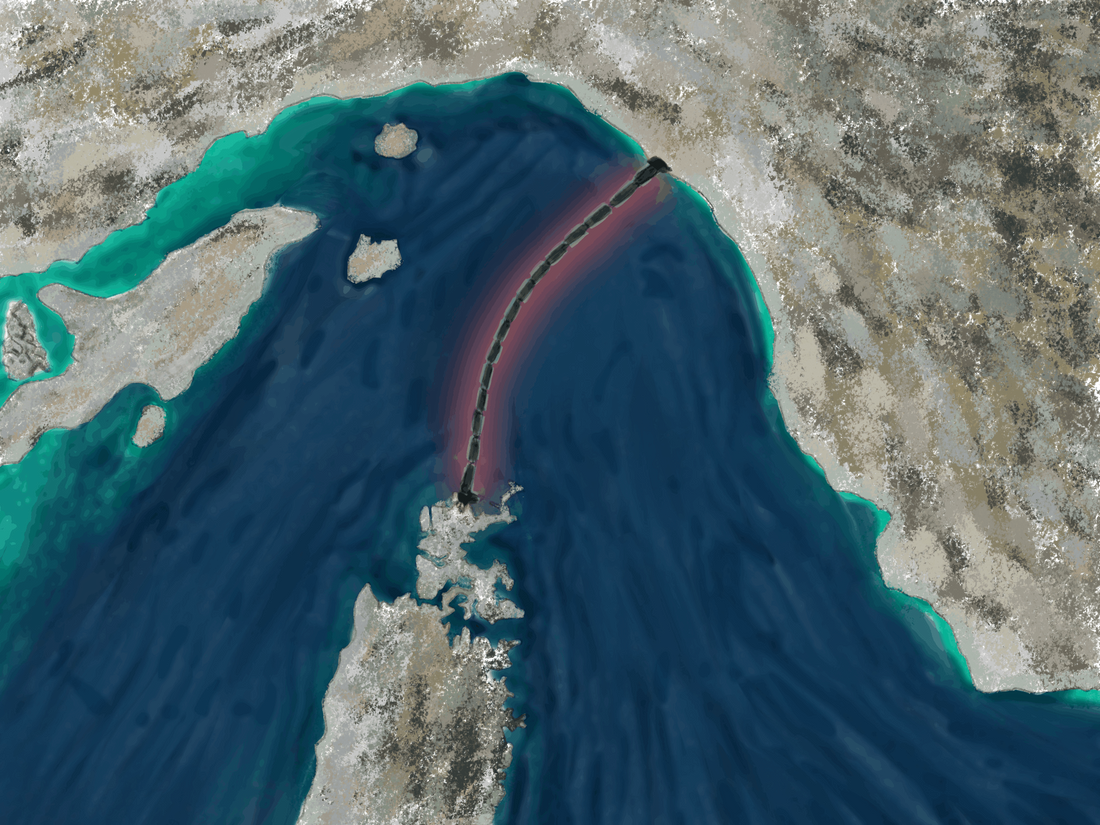
The closure of the Strait of Hormuz due to the current conflict in the Middle East has caused significant shortages in the exports of natural gas in the global fossil fuel market. The shortage has had a particularly great economic impact on South, Southeast, and East Asia, where many countries such as South Korea, Thailand, and India are deeply reliant on fossil fuel imports. The Middle East contains 40 percent of the world’s proven natural gas reserves, which formed after millions of years of geological change caused by extreme heat and pressure that physically and chemically transformed organic material into fuel. Advocates for renewable energy consider the impacts of the shortage as an example of the instability that characterizes the fossil fuel supply chain, a reason to accelerate the adoption of alternative energy sources. Nevertheless, it is important to understand the scientific and economic properties of natural gas.
The majority of natural gas in the Middle East comes from marine organisms such as plankton that lived in the Mesozoic, between 252 and 66 million years ago, in an area called the Tethys Ocean. When these organisms died, they sank to the sea floor. The organic material they are composed of, called kerogen, is rich in carbon, hydrogen, and oxygen, the primary elements of life. As the earth on the sea floor shifted, the kerogen was forced deeper into the crust of the Earth, resulting in compaction and the creation of sedimentary source rocks. This exposed the kerogen to extreme temperatures that caused it to break down into hydrocarbons, compounds consisting of purely hydrogen and carbon, in a process called geologic pyrolysis. In pyrolysis, the oxygen in the source rocks is removed as water and carbon dioxide. This leaves only carbon and hydrogen remaining, producing usable hydrocarbons such as methane. Pyrolysis also removes elements that occur in lower concentrations, such as nitrogen and sulfur, from the kerogen.
Yet, it is important to understand the difference between oil and natural gas, two substances that are often confused with each other. Crude oil is a liquid form of fossil fuel composed of various hydrocarbons. On the other hand, natural gas is a gaseous form of fossil fuel composed primarily of lighter hydrocarbons such as methane and ethane. They are frequently found in deposits together as they often originate from the same kerogen. This natural gas, primarily in the Middle East, is found with oil and is called associated natural gas. Oil sinks to the bottom, while natural gas floats since it is lighter. After they are pumped out, the fossil fuels are artificially separated and sold separately. Whereas natural gas is more commonly used as a fuel for the generation of electricity, oil is primarily converted into industrial materials and fuel. The majority of oil is converted into gasoline and diesel, two fuels often used to power transportation and machinery.
Environmentally, the widespread usage of natural gas is controversial, given that it releases less carbon dioxide immediately than other fossil fuel sources like coal when combusted. However, the transport of natural gas through pipelines can result in the leakage of methane, a greenhouse gas 28 to 80 times more potent than carbon dioxide. For this reason, many climate activists oppose the industry, while some may support it as a “clean” alternative to other fossil fuels. Currently, scientists and engineers are working to make the natural gas industry more efficient and environmentally friendly by reducing leakage. In recent years, the US government has increased its investment in domestic energy sources. Historically, democratic administrations have seen higher investment in renewable energies, while republican administrations have seen higher investment in fossil fuels. Like past administrations, the Trump administration has stressed the goal of energy independence from foreign markets, and wishes to do so by investment in both fossil fuels, such as natural gas, and renewable, especially nuclear, sources.
Overall, natural gas plays a major role in the political, economic, and scientific worlds, and whether or not its dominance of the energy market will expand remains uncertain. The presence of natural gas is a result of millions of years of geologic change, and it is important to understand the differences between the different fossil fuels. The climate impact of natural gas is a growing concern, and assessing its effects is key when planning our energy future.