How Narendra Modi Has Failed India
Despite Narendra Modi’s immense popularity, the results of his administration have been far from ideal for India.
Reading Time: 4 minutes
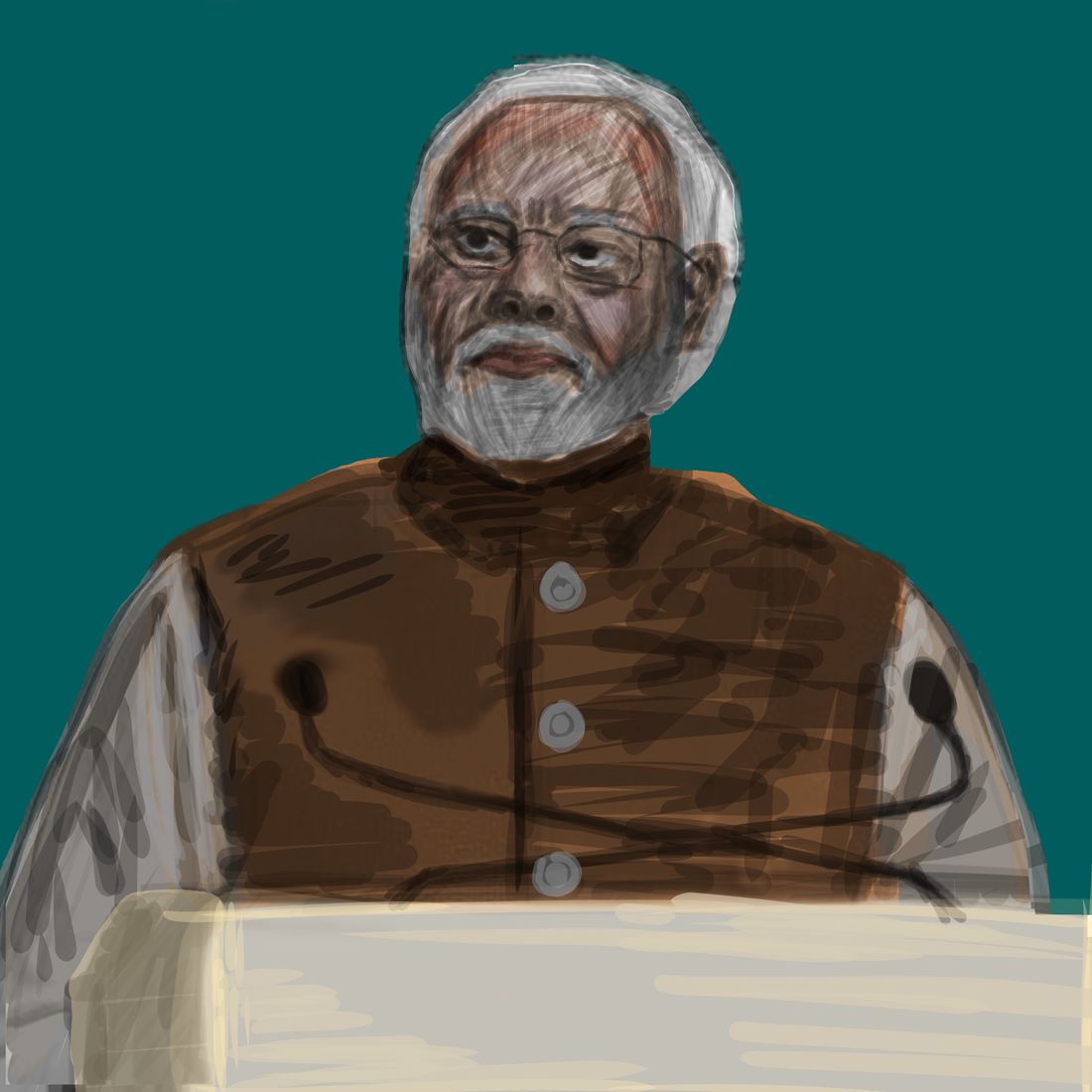
At first glance, a political leader with an approval rating of 70 percent heading a powerful government may seem like the sign of a thriving country. India’s Prime Minister Narendra Modi consistently maintains approval ratings this high, yet these percentages only mask deeper issues hurting the country.
Modi has sat at the helm of India’s political leadership since 2014. Representing the Bharatiya Janata Party (BJP), Modi is a polarizing figure globally, though his administration has been seen in a largely positive light by the Indian public.
As someone with family living in India, I have witnessed this popularity firsthand. Whether through the pro-BJP messages I get in WhatsApp groups or face-to-face discussions I have with family members, the recurring themes are those of the belief that Modi has strengthened India and of overwhelming national pride. Much of that makes sense to me. Under Modi’s leadership, India has been elevated to the world stage through increased participation in intergovernmental organizations and tightening relations with several countries. Coupling this with his charisma and oratory skills, it's understandable why the majority of the country, including my family, supports him. However, confidence in one’s country becomes an issue when it starts to meddle with one's ability to be objective. Though Modi has theoretically brought benefit to India in some ways, the results of his administration should be seen as a disappointment.
In particular, Modi’s promotion of a Hindutva (Hindu nationalist) agenda has led to an increase in religious division within the country. India is constitutionally defined as a secular nation, yet it’s heading in the opposite direction as religious minorities see constant marginalization. During the Prime Minister’s 2024 electoral campaign, he made frequent comments concerning minority groups that have been criticized as inflammatory and that have been used to incite discrimination and hostility. These comments coincided with at least 28 reported post-election attacks, in which 12 Muslim men and a Christian woman were killed. This isn’t just an issue of Modi’s 2024 campaign, but rather one that’s lasted for the duration of his time in office. The Hate Crime Watch tracker found that between 2009 and 2018, 90 percent of religious hate crimes occurred after the BJP came to power, with primary targets being Muslims. Modi and the BJP’s rhetoric on minorities, as well as their refusal to address increasingly common hate crimes, have only motivated Hindu supremacists to engage in violence and hateful conduct, as they have more opportunity in an environment where violence against minorities is normalized rather than criticized.
Along with rhetoric, India’s legislative action under Modi has shaped religious intolerance. The Citizenship Amendment Act of 2019 is a notable example. The act fast-tracks Indian citizenship for persecuted migrants from Pakistan, Bangladesh, and Afghanistan who entered India before 2015, but explicitly excludes Muslims. Its passing led to an increase in anti-Muslim incidents and revealed a clear bias against the Muslim community.
Freedom of the press in India has also severely diminished since Modi assumed office. A prime example of this deterioration is the 2023 banning of the BBC’s “India: The Modi Question.” The documentary criticized Modi and highlighted his role in the 2002 Gujarat riots, which killed thousands of (mainly Muslim) people when he served as the chief minister of Gujarat. Though the controversial documentary was only broadcast in the UK, the Indian government was quick to invoke emergency laws that banned its content from circulating on social media outlets. The administration defended the ban by labeling it as a biased and propagandized piece, but the ban was ultimately a misuse of executive power aimed at preventing the expansion of any negative outlook on the prime minister. Just weeks after the documentary’s release, BBC offices in India were raided by tax department officials who claimed to have been conducting a “survey.” Officials seized phones, laptops, and documents of journalists, then reportedly questioned them for nearly 60 hours. This is only one of the numerous instances of Modi’s administration silencing narratives that challenge the BJP and using intimidation tactics to quiet the media.
India’s democracy has also been undermined by reduced freedom of the press and the weakening of checks and balances. Modi has used the judicial branch as an instrument of the central government, as his administration has manipulated delays and vetoes to block judicial candidates it opposes ideologically. He’s also used state agencies to go after political opponents. A 2022 study found that since 2014, there was a fourfold jump in Enforcement Directorate (a specialized financial agency focused on money laundering and foreign exchange violations) cases against politicians, with 95 percent of the cases ruling against the opposition. The data shows a strong pattern of the disproportionate targeting of Modi’s ideological opponents, which only began when he assumed power.
Modi’s actions while in office have had negative effects on India’s economy, too. India began trade liberalization in 1991, transforming its economy from being heavily protectionist and centrally-planned to being a more market-oriented economy. As a result, Indians saw what is considered one of the largest reductions in poverty a country has experienced, with hundreds of millions exiting extreme poverty. Yet despite the wonders trade has done for India, Modi has kept a largely protectionist mindset. The trade-weighted average tariff was 6.34 percent in 2013, before Modi’s tenure. By 2023-24, it rose to 12 percent, nearly double that of 2013. India’s GDP growth under Modi has averaged 6-7 percent, which is fast compared to the rest of the world, but slower than economies such as China’s during their industrialization phase.
In order for India to operate as a country that benefits its citizens, it must ensure that the treatment of all is fair and equal, political polarization is controlled, its democratic institutions are robust, and pro-growth economic policies are implemented. The BJP is very unlikely to be the party that can assist India in achieving these goals, despite Modi’s ability to instill confidence within the nation.
Unfortunately, opposition to the BJP is weak at the moment. The Congress Party is the next largest party, yet it’s unable to gain much popularity after being in power for decades without satisfactory results for India. In my view, the Indian population needs to fight for the ideals that will benefit their future, and only then will we see true change and new candidates willing to take India to new heights.