
How Isack Hadjar May Finally Break Red Bull’s “Second-Seat Curse”
Isack Hadjar’s qualifying wins over Max Verstappen and his new contract have put Red Bull’s “second-seat curse” in doubt.
Reading Time: 6 minutes
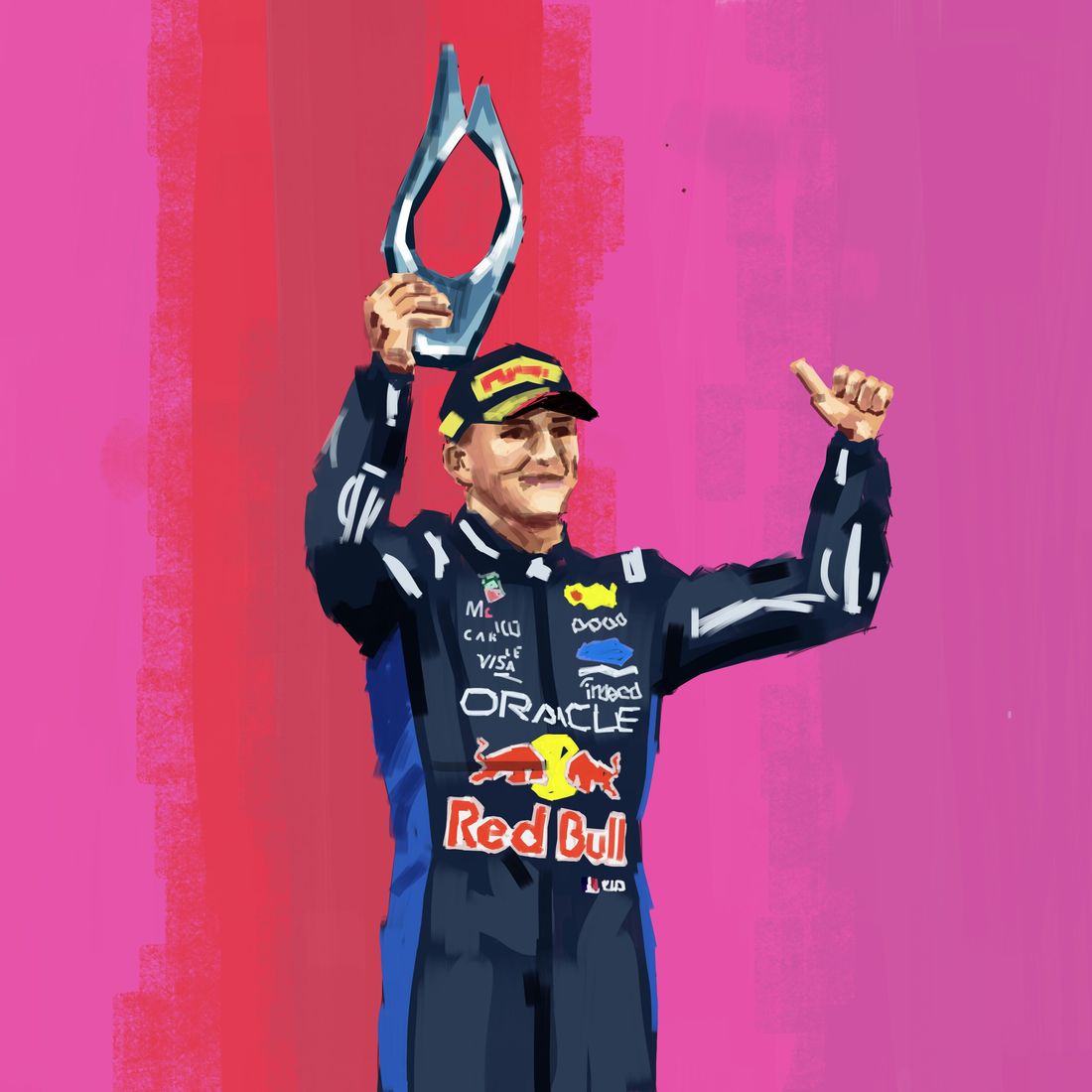
For many modern Formula 1 (F1) fans, the second seat at Red Bull Racing has served as a career graveyard for some of the sport’s brightest young talents. Since Daniel Ricciardo left after the 2018 season, five drivers have partnered with four-time world champion Max Verstappen, and none have lasted. From Pierre Gasly’s mid-season demotion to Alexander Albon’s loss of confidence and Sergio Pérez’s steep drop-off in performance, the seat next to the four-time World Champion Max Verstappen has broken driver after driver. Critics point to a car built around Verstappen’s aggressive style, long proved to be a nightmare for his teammates to handle, paired with the intense pressure from fans, media, and the team to live up to the expectations of being Verstappen’s right hand man. This pattern has become dubbed the “second seat curse.” However, as Formula 1 introduced a brand new set of regulations, 22-year-old Red Bull driver Isack Hadjar may finally be challenging the precedent.
Born in Paris to a family of Algerian origin, Hadjar fell in love with racing at a young age, despite not having a traditional motorsport background. In fact, he was brought up by a family of physicians and physicists with zero connection to motorsports. It was the movie Cars that first hooked him on racing, which led him to go-karting at just five years old. However, since his family lacked the multi-million-dollar funding typically required for competitive junior racing, both of his parents made huge sacrifices: Hadjar’s father became his mechanic, and his mother managed his career. Without the luxury of having practice days, Hadjar was put under immense self-imposed pressure to perform at every race he attended. That mentality created a “fighter-like” hunger to prove himself wherever he went. When Red Bull’s motorsport advisor Dr. Helmut Marko signed Hadjar following a dominant 2021 Formula Regional victory in Monaco, he continued to bring that raw grit to the junior ranks.
In 2017, Hadjar earned a spot at the FFSA Academy in Le Mans, France, an institute that had elevated the careers of fellow Frenchmen Pierre Gasly and the late Jules Bianchi. He finished third in the French F4 division, competed in Asian F3, and in 2021, stepped up to Formula Regional, a junior league that sits between Formula 4 and the FIA Formula 3 Championship. But behind the scenes, financial struggles almost ended his career before it took off. “It was tough,” Hadjar said, “knowing that every time I hit the track, I needed to deliver…If I don’t perform, I’m going to disappoint my whole family.” However, his moment came later that year in Monaco, where he led every single lap en route to a dominant victory. This result caught the eye of Marko, who signed Hadjar into the Red Bull Junior program.
Without the worry of financial struggle, Hadjar’s career took off, as he finished third in the Asian series of Formula Regional and fourth in Formula 3 the following year. In 2024, Hadjar was part of a season-long title fight for the Formula 2 Championship with now-Audi driver Gabriel Bortoleto. The bout led to a final round of racing at Abu Dhabi, where Hadjar trailed by 4.5 points and simply had to beat his rival to take the championship. But when the five red lights went off for the race start, Hadjar’s car stalled, ending his championship hopes right then and there. “I’m not upset losing the title, I’m upset that I didn’t get the opportunity to fight for it,” Hadjar recalled.
Hadjar was promoted from the junior team Racing Bulls after a rookie season that saw him finish on the podium at the 2025 Dutch Grand Prix, and the 22-year old knew the pressure he was inheriting. When Red Bull announced his promotion last December, Verstappen was heading into the season finale seeking a fifth straight title. His teammate, Yuki Tsunoda had 30 points and sat 15th in the standings.
When asked about the history of drivers who had failed before him, Hadjar acknowledged that the legacy looming over the second seat was hard to ignore. “There was a bit of doubt and pressure, but so far it’s been going pretty much like I wanted. It was definitely on my mind,” Hadjar said in an exclusive interview with Formula 1 journalist Lawrence Barretto back in April of this year. “Of course I [felt pressure] in a way because you look at the gaps between Max’s teammates, and you’re like ‘Wow, this is weird,’” he added.
Hadjar’s concerns have proved to be true on multiple occasions. Verstappen, on average, has outqualified all of his teammates by several tenths since his days alongside Daniel Ricciardo. However, Hadjar anticipated a cleaner transition in his favor before the season began. “2026 is a different question because it’s a brand new start for the team,” he said. “There won’t be this talk of the second car thing. This wouldn’t be a thing because it’s a brand-new car for everyone.”
So far in 2026, that resilient mindset has directly translated into real performance, shown most clearly during Saturday qualifying sessions. Instead of lagging several tenths behind Verstappen, Hadjar trailed him by an average of just 0.153 seconds through qualifying at Silverstone and outqualified the Dutch world champion four times. The first came in Australia, where he qualified third while Verstappen crashed in the first round of qualifying. In Japan, he outqualified him by three positions, and in Britain, he qualified fifth to Verstappen’s seventh. The latest of the four occasions came in Baku, where he qualified fourth in his first race back from injury, while Verstappen, who said he was “down on power,” started eighth.
Grand Prix Sundays have produced promising results. Despite two retirements and a wrist injury that cost him three races, Hadjar still scored points in nine of his 12 starts. Still, Verstappen outscored him 163 points to 86 through 15 rounds. Despite the deficit to Verstappen, the highlights of Hadjar’s season so far are two podiums: a controversial one in Monaco amidst penalty drama, and the other in Azerbaijan on his return from injury. His ability to match Verstappen’s single-lap pace while managing his tires has provided Red Bull with the strategic flexibility they need to reassert themselves at the top of the sport. The blend of raw speed and resilience has caught the attention of the Formula 1 paddock, but opinions still remain divided on whether Hadjar’s performances are enough to permanently break the curse. Sky Sports F1 commentator and former driver Martin Brundle noted on an episode of the Rolling Start podcast, “You don’t get to the position Hadjar is in without wanting to be a world championship-winning F1 driver. And to be a world championship-winning F1 driver means beating everyone. And everyone includes Max last time I checked.”
Red Bull management has taken note, and after Baku, Red Bull team principal Laurent Mekies praised the composure Hadjar showed over the radio after giving up his position to Verstappen. Rather than venting his frustration over the team radio, a common downfall for young drivers under immense pressure, he maintained composure and followed through with orders. For a driver battling the pressure that comes with the second Red Bull seat, the level of discipline and trust in his team’s strategy elevated his status among the team. “So it’s exactly that trajectory that has been impressing us every day since he has joined the team,” Mekies said. “And also for that, we want to give him the best possible environment to continue to develop because that step was truly impressive.”
By outqualifying Verstappen four times and scoring in nine of his 12 races, Hadjar has begun to make the case that the second Red Bull seat doesn’t need to be a career-defining curse. On September 23, ahead of the Azerbaijan Grand Prix, Red Bull announced Hadjar’s contract extension, retaining his seat for the 2027 Formula 1 season. This followed Verstappen’s agreement to a new long-term contract with Red Bull until 2030. “From the moment I signed, I set out to dedicate myself to the team, and with the support of Laurent [Mekies] and everyone in Milton Keynes, I’ve been able to justify the faith they’ve had in me,” Hadjar said. If his current career trajectory holds, the Frenchman may be able to defy the notorious “Red Bull second-seat curse.”