
How AI Is Reshaping and Disrupting Traditional Healthcare
Artificial intelligence is transforming healthcare by improving diagnosis, enabling personalized treatment, accelerating drug development, and reshaping the future of medicine.
Reading Time: 6 minutes
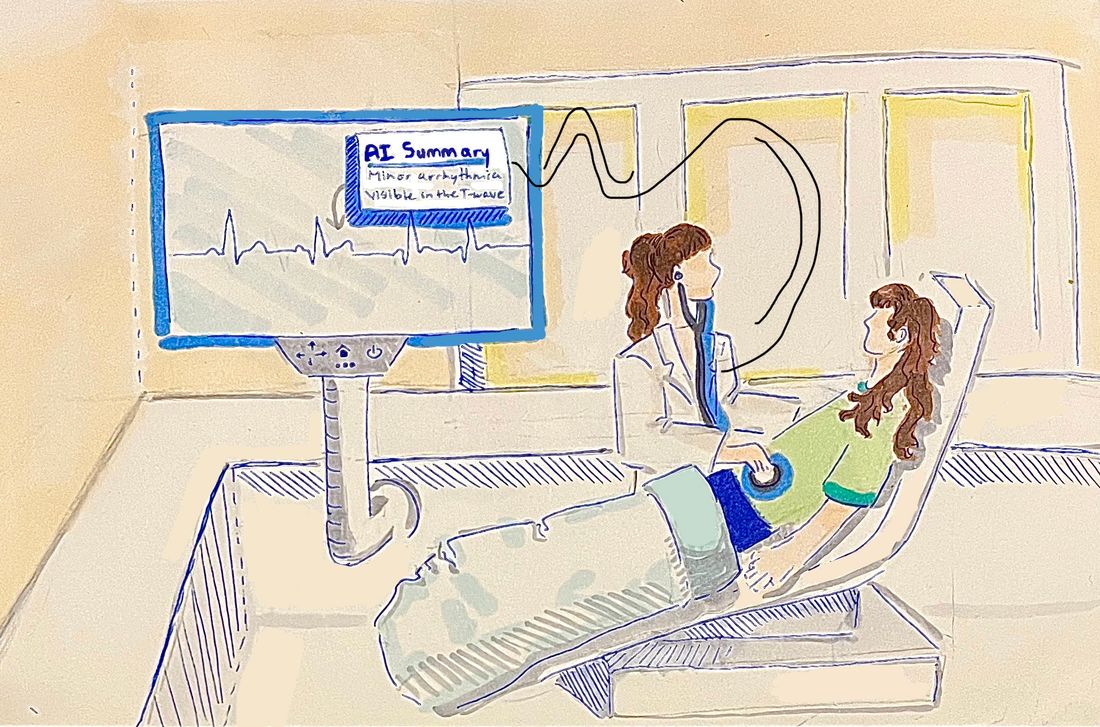
Traditional healthcare, or healthcare that does not involve the use of artificial intelligence (AI), relies heavily on doctors’ experience, manual records, and routine examinations. This results in lengthy decision-making cycles and limited personalization. The rapid development of artificial intelligence is making a comprehensive entry into the world of medicine, from cancer diagnosis and personalized treatment plans to smart hospital management, making medical care faster and more accurate. While artificial intelligence poses challenges regarding privacy and data reliability, it is becoming an indispensable assistant to physicians and is actively reshaping the future of healthcare.
Medical image analysis and precision diagnosis
In traditional medical image analysis—the process of interpreting diagnostic images such as X-rays, CT scans, and MRIs to detect, monitor, or diagnose diseases—doctors often rely on their clinical judgement and prior experience, which are susceptible to subjective factors and carry a risk of misdiagnosis and missed diagnosis. Current AI advancements have enabled automated image allowing rapid detection of minute lesions and providing quantitative support for diagnosis. For example, an AI system developed by DeepMind (a Google subsidiary) assists in breast cancer diagnosis by using deep learning technology to analyze a large number of breast X-ray images and automatically detects potential cancerous lesions. Practice has shown that this AI system reduces the missed diagnosis rate by five to seven percent and the maternal mortality rate by 1.2 percent. The system’s diagnostic accuracy surpasses that of traditional radiologists. Furthermore, AI systems not only improve detection accuracy but can also handle larger datasets than doctors, thereby accelerating diagnoses. AI-driven early detection systems have increased the success rate of early breast cancer diagnosis by approximately 20 percent. With continuous technological advancements and algorithm optimization, the application of AI in medical image analysis will further enhance diagnostic accuracy, increase efficiency, and expand its clinical capabilities in the future.
Personalized medicine (Precision medicine)
Personalized medicine—medicine care tailored to an individual’s unique genetic, environmental, and lifestyle characteristics—has historically faced challenges due to the limited availability of comprehensive patient data. In contrast, AI-powered precision medicine enhances treatment by integrating large-scale genomic and clinical data, enabling more refined and targeted therapies. Genomics, the comprehensive study of an organism’s entire genome or set of DNA, is the cornerstone of personalized medicine, and the introduction of AI has brought breakthroughs to this field. Through deep learning algorithms, AI can analyze large amounts of genetic data and quickly identify disease-related gene variants. For example, IBM’s Watson Genomics system can analyze over 200,000 medical documents and gene sequences in just 10 minutes, and match them with patients’ genetic differences to help doctors accurately develop personalized treatment plans. AI can reduce genomic analysis time by approximately 85 percent and improve the accuracy of tumor treatment, particularly in complex cancer cases. However, overreliance on AI can have drawbacks; clinicians may become less adept at independent tumor detection when consistently depending on AI recommendations. By integrating genetic data and treatment outcomes of millions of cancer patients worldwide, AI can also discover potential links between new gene variants and diseases, which helps to identify individuals at risk and guide preventative interventions. AI-based genome analysis not only makes treatment plans more personalized but also significantly improves the success rate of cancer treatment.
New drug development
Traditional drug development is not only time-consuming and costly, but also has an extremely high failure rate. Traditional development models often adopt a standardized approach of “one drug for most patients,” which does not account for individual variability and can fail to meet all patients’ needs. In contrast, by simulating the interaction between drug molecules and physiological systems, AI tools can uncover patterns from massive amounts of biological and chemical data and rapidly predict the efficacy and safety of candidate drugs. For example, Insilico Medicine applied Generative Adversarial Networks (GANs) and deep learning algorithms to de novo molecule design, a process where new molecules with desired properties are generated from scratch, in drug discovery. In 2019, the Insilico team completed the entire process, from molecule design to synthesis verification, in just 46 days using GANs and deep learning algorithms. These newly designed molecules exhibited potent Discoidin domain receptor (DDR1) inhibitory activity, which is closely related to various diseases, including fibrosis and cancer, and drug properties that demonstrate the potential of AI in drug discovery and design. This research has significant clinical application prospects and represents a breakthrough for AI in drug discovery, especially in accelerating drug development cycles and improving development efficiency, although AI predictors can sometimes fail in clinical testing, and overreliance on AI might overlook subtle biological factors captured by traditional experiments
Medical robotics and automation
The application of AI in surgery is improving the precision, safety, and efficiency of surgeries. Currently, AI technology in surgery is mainly used in surgical robots and preoperative planning. AI not only reduces the workload of surgeons but also speeds up patient treatment. Globally, surgical robot technology has made significant progress. Since its introduction in 2000, the da Vinci Surgical robot, manufactured by Intuitive Surgical Inc., has been widely used, particularly in minimally invasive surgery, urology, gynecology, and thoracic surgery, and it has demonstrated extraordinary precision and flexibility. Furthermore, the da Vinci robot possesses intraoperative image analysis and intelligent real-time surgical assistance capabilities, which help improve surgical success rates and reduce human error. Through its high-definition 3D vision and multi-degree-of-freedom robotic arms, surgeons can perform surgeries more precisely, which significantly reduces patient trauma and speeds up recovery.
Healthcare resource management and intelligent support system
Traditional healthcare resource management relies on manual planning and makes predictions and allocations based on historical data. This causes a lack of flexibility and leads to resource idleness or shortages. By integrating and analyzing dynamic data in real time, AI can accurately predict patient needs, optimize resource allocation, help healthcare institutions respond quickly during peak periods and emergencies, and avoid resource waste. For example, Google DeepMind collaborated with the UK’s National Health Service (NHS) and developed an AI system for hospital operations. This system improved hospital efficiency by predicting inpatient needs, optimizing bed management, and reducing wasted time. In healthcare supply chain management, AI can optimize inventory management, predict the usage of medicines and medical equipment, and prevent oversupply or shortages. Furthermore, AI can generate optimal scheduling plans through algorithms that ensure that hospitals always have adequate healthcare staff on duty. In clinical decision support, AI can provide doctors with a comprehensive patient profile by extracting key information from patients’ health records and analyzing medical history, examination results, and medication records. When prescribing medications, AI can automatically check for drug interactions and alert doctors to potential side effects or allergic reactions to ensure patient medication safety.
Public health and epidemic surveillance
AI plays a crucial role in public health, particularly in disease surveillance and early epidemic warning. AI utilizes epidemiological data—data referring to the occurrence, spread, and control of diseases in populations—along with population movement information and environmental factors to build disease transmission models, predict epidemic trends, provide timely warnings, and support public health decision-making. For example, the Canadian company BlueDot uses AI-driven algorithms to monitor infectious disease information globally in real time. BlueDot’s system scans new reports, animal and plant disease reports, and official epidemic data in 65 languages every 15 minutes. After the automated data screening is complete, epidemiologists carefully examine the validity of the conclusions before sending reports to clients such as governments, businesses, and public health organizations. In that way, BlueDot demonstrates the potential of AI and big data in public health surveillance and early warning.
Challenges and risks
Medical data privacy and security are major concerns during the integration of AI in healthcare and require robust protection to ensure data security during all stages of sharing and usage. Furthermore, the reliance on vast, high-quality clinical data poses a risk of algorithm bias, where unbalanced training data can lead to inaccurate outcomes. The potential for AI-driven misdiagnosis creates complex issues of responsibility attribution that demand clear legal and ethical frameworks. Ultimately, navigating regulatory lag is essential, and while there are emerging guidelines and frameworks (e.g., FDA, GDPR, WHO), establishing comprehensive laws and ethical guidelines is still required to ensure that medical AI develops within a controllable, trustworthy, and safe framework.
AI innovation has not only significantly improved the accuracy and efficiency of medical processes, facilitated early detection of complex diseases, and enabled more effective treatments, but it has also introduced important challenges that must be addressed. These include concerns over data privacy and security, the risk of algorithmic bias from unbalanced clinical datasets, and the potential for AI-driven misdiagnosis, which raises complex questions of legal and ethical responsibility. Despite these risks, AI has provided key technological support for the global healthcare system, accelerated the transformation of modern medicine, and serves as a major driver of innovation. Moving forward, ensuring that AI develops within a trustworthy, safe, and ethically guided framework through robust regulations, comprehensive laws, and enforceable ethical guidelines will be essential to maximize its benefits while minimizing its potential harm.