
Gold, Bold, and Breaking the Mold: Alysa Liu’s Rise to the Top
How Alysa Liu’s gold medal at the 2026 Winter Olympics is changing history.
Reading Time: 5 minutes
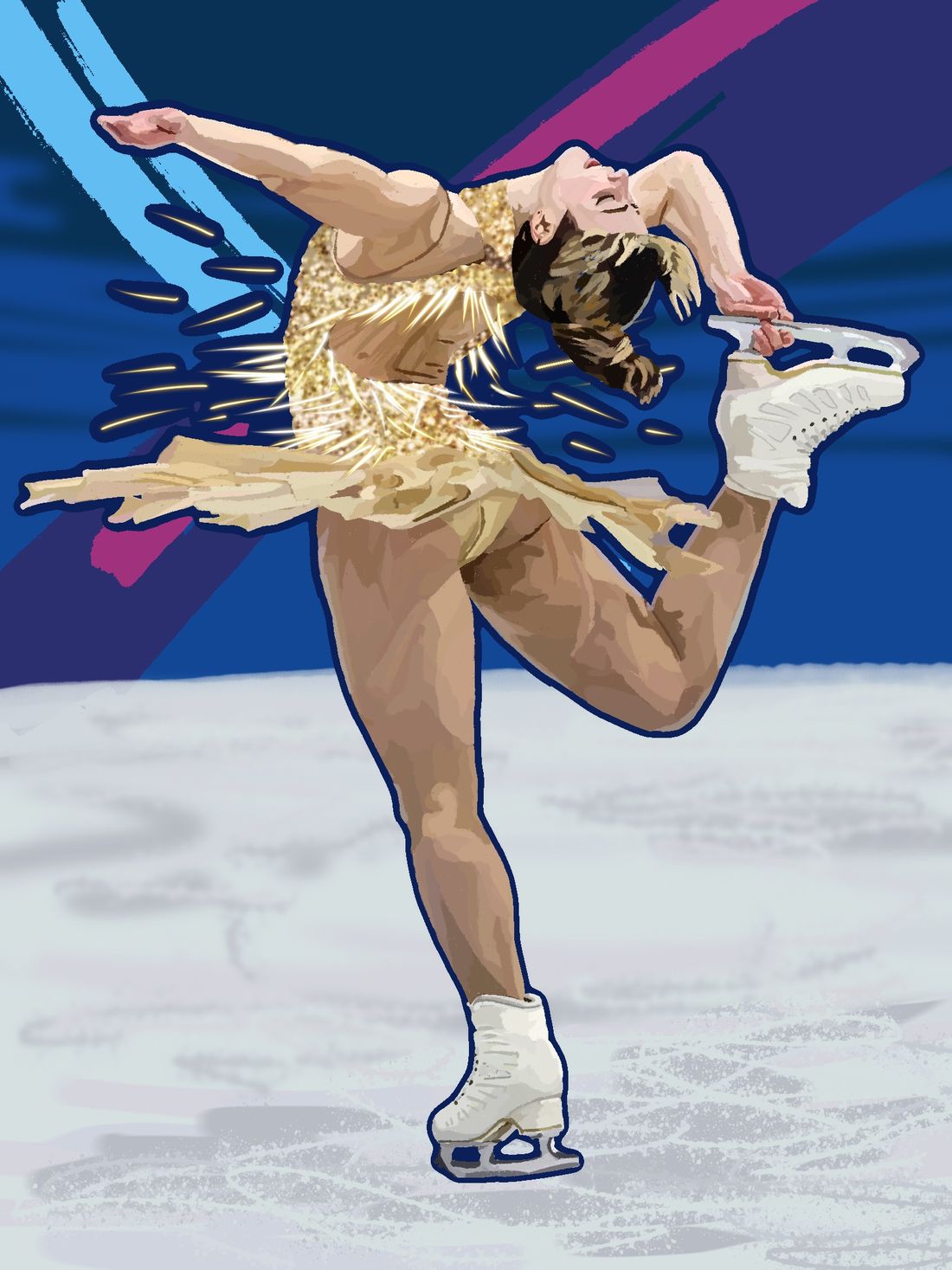
In a historic victory for the United States, figure skater Alysa Liu became the country’s first Olympic gold medalist in women’s figure skating since 2006. After her lauded short program skate to “Promise” by Laufey landed her in third place, Liu skated back to the top with a near-flawless long program to “MacArthur Park Suite” by Donna Summer. She ended with a combined score of 226.79, a personal best that beat out the silver and bronze medalists, Japan’s Kaori Sakamoto and Ami Nakai, respectively. Donning a custom glittery gold dress from Lisa McKinnon, Liu’s contagious energy brought the crowd to their feet in a standing ovation. Her win was historic beyond the world of the Olympics; Liu’s story is one of perseverance, self-love, and joy in a sport that was thought to reward suffering.
Alysa Liu’s career spans back more than 10 years, where she found success at the junior level—notably as the 2018 U.S. National Junior Champion and two-time Grand Prix Champion—before becoming the youngest ever U.S. Women’s National Champion at only 13 years old. Liu became the first American woman to land a quadruple jump in competition, making her the clear choice for the 2022 Beijing Olympic Team.
By the time she turned 16, it seemed like Liu was on top of the skating world. But, in a post that shocked the entire skating community, she announced her early retirement. “I feel so satisfied with how my skating career has gone. Now that I’m finally done with my goals in skating, I’m going to be moving on with my life,” she stated in an Instagram post. The skating community had mixed reactions, from concerns that she was wasting her potential to criticisms that she was being selfish. In an interview with the San Francisco Chronicle, Liu herself admitted that she felt the choice was selfish. Despite the fact that Liu had spent her entire childhood training to be the best, it was not enough; her choosing her mental health over the expectations of her coaches and supporters was a betrayal to the culture of persistence ingrained in the sport.
From Richmond, California, raised by a single Chinese father, Liu started skating at five years old—an early start, but not uncommon for most elite figure skaters. Throughout her childhood, she underwent intense training nearly every day at her home rink in Oakland. As an unfortunate product of skating culture, she was subjected to body shaming, a toxic environment, and crushing expectations from those around her. “I would be told, like, you can’t eat this, you shouldn’t drink water and stuff like that, because you should be as light as possible,” she explained in an interview with Sports In America. Her retirement came shortly after the peak of COVID, as rinks across the country were forced to close. She spent her time off the ice studying psychology at UCLA and spending time with her family and friends.
However, after an adrenaline-packed skiing trip reignited Liu’s passion for skating, she spontaneously stepped back on the ice for the first time in two years. This time, she asserted, on her own terms: no more diets, no more abuse, and no more chasing titles. Her success, not just in competition but mentally, was immediate. She won the 2025 Grand Prix Final, won the 2025 World Figure Skating Championships, and then finished second at the 2026 US Nationals. “There was something different about the way she moved her body that was no longer a child. For many years, she was dropped off at the rink. She was told what to do. Now she comes in and it is all collaborative,” her coaches explained in an interview with 60 Minutes. Liu was no longer competing for someone else, or for a title, but instead for herself. Her independence was paired with a new mentality, too: Now, Liu is adamant that her skating journey is more about having fun than medalling. “I don’t need this [gold medal]. But what I needed was the stage, and I got that, so I was all good no matter what happened. If I fell on every jump, I would still be wearing this dress,” Liu explained in an interview after her performance. In a sport that rewards coolness under pressure and a show for the audience, Liu’s new mindset—in spite of what skating culture may say about it—gave her the outward joy and clean jumps that earned her the gold.
Liu’s mindset was not the only thing that was different; this time, she donned a new look. Sporting alternative outfits, piercings, and her signature “halo ring” hair, Liu brought a fresh style that broke the mold of the more clean-cut skating community. While initially met with judgement, over time, commentators and viewers alike couldn’t help but grow to love her unique look. Furthermore, her energy on the ice and social media presence resonated with audiences who saw her as down-to-earth. After her medal-winning performance, Liu remarked, “That’s what I’m [EXPLETIVE] talking about!” on live television. Liu’s energy and unique style made her an immediate social media hit. Her follower count jumped from 300,000 to 5.3 million in just a few weeks. TikTok edits and social media posts complimenting her radiant joy in an otherwise demanding and sobering sport went viral across multiple platforms. Her star power is undeniable—and changing the world of figure skating.
Historically, the very abuse that made Liu quit has been a hallmark of figure skating. Infamously, young pre-teen skaters have been left with chronic injuries, lifelong trauma, and doping scandals under abusive coaches, all in order to achieve competitive success at the highest level. Examples include Kamila Valieva, whose team gold medal was stripped after she tested positive for a banned substance at the Beijing Olympics, and Yulia Lipnitskaya, who was one of many skaters who had to retire after battling an eating disorder rumored to be a symptom of her intense training.
In stark contrast, Liu went directly against the trajectory of these top skaters, retiring early at what many would consider the “peak” of her career. Her success is a testament to the idea that pushing young skaters past their limit is not what creates an Olympic champion—letting them take time for themself and build their own passion is.
Outside of skating, for a generation that is told success is predicated on pushing yourself past your limit and setting your mental health aside, it’s easy to see how Liu is so appealing. Alysa Liu putting herself first—and still pushing herself to be the best she can be—is an inspiration to young people across the world.
Alysa Liu plans to continue skating, stating that she has “no plans to leave skating, yet,” and “can’t imagine not skating next year,” in an interview with NBC. Liu has returned to Oakland, where she is celebrating her Olympic victory. It is unclear whether Liu plans to compete in the 2030 Olympics, but until then, viewers across the world will continue cheering her on.